
Can Cats Smell Mice? And How Mice Sense Cats
Have you ever seen your cat suddenly freeze and stare intently at a wall or cabinet, leaving you to wonder if it’s picked up the scent of a mouse? As a mouse owner who has watched my own pets react to feline presence, I know this curiosity and concern firsthand. This guide will provide you with clear, reliable answers about the scent-based relationship between cats and mice, straight from my years of experience.
We will explore the fascinating ways these animals detect each other. You will learn exactly how a cat’s powerful sense of smell allows it to locate mice. We will also cover the innate abilities mice have to sense and avoid cats, including the specific signs they show. And I will share practical insights for maintaining a safe and comfortable environment for all your pets.
Can Mice Smell Cats?
A mouse’s primary method for navigating the world is its nose. Their sense of smell is so profoundly developed that it acts as a constant, 3D map of safety and danger. From my own observations, my mice, Kenny and Gregory, can detect a change in the air long before I even see the cause. They absolutely can, and do, smell cats. This isn’t a vague suspicion; it’s a hardwired survival mechanism. The scent of a cat triggers an instinctual fear response that is immediate and powerful.
How Far Can Mice Smell Cats?
The distance is impressive and a little startling. Under ideal conditions with air currents, a mouse can detect the scent of a predator like a cat from several rooms away. Think about the airflow in your home-scents travel through vents, under doors, and along hallways. I’ve seen my typically bold and curious mouse, Kenny, freeze mid-exploration when a visiting cat was simply resting in a closed bedroom down the hall. His entire posture changed from playful to hyper-vigilant in an instant. The exact distance varies, but the message is clear: if a cat is in your home, your mice almost certainly know it.
What Cat Scents Do Mice Detect?
Mice aren’t just smelling “cat.” Their sophisticated olfactory system picks apart the scent into specific, alarming components. They are detecting chemical signals that scream “predator.” Those same olfactory channels underlie scent marking: mice deposit and read chemical signals that convey danger, territory and social status. Predator odors can also alter these scent marks, changing how mice behave and communicate.
- Feline Pheromones: These are chemical messages cats leave behind, even when they are just sleeping or grooming. It’s their signature, and to a mouse, it’s a direct threat.
- Saliva and Dander: The proteins in a cat’s saliva, spread during grooming, and the microscopic skin flakes (dander) that shed constantly are potent alarm triggers.
- Urine and Fecal Matter: These are the most potent and long-lasting scent markers. Even a litter box in another room can be a persistent source of stress for a sensitive mouse.
Do Cats Smell Mice?
Without a doubt, yes. A cat’s sense of smell, while not as dominant as a mouse’s, is still about 14 times stronger than a human’s. Your pet cat can likely smell your pet mice even when their enclosure is securely closed. I’ve watched my friend’s cat become utterly fixated on a bookshelf across the room where my mice’s old habitat was stored, days after the mice had been moved. They can detect the complex cocktail of scents mice produce. Because cats can still detect these scents long after mice are gone, it’s important to clean and deodorize enclosures and surrounding areas to reduce lingering odors in the home. Regular bedding changes, thorough washing or sealing of habitats, and good ventilation will help minimize detectable mouse smell.
- Urine Trails: Mice use urine to mark their territory and create scent paths. To a cat, this is a bright, flashing neon sign.
- Body Odors and Pheromones: The natural musk of a mouse, along with its own stress or contentment pheromones, is easily picked up by a feline nose.
- Food and Bedding: The smell of their food stash, nesting materials, and even the general “mouse habitat” aroma is a powerful attractant for a cat.
The key to peaceful co-existence is creating a physical and sensory barrier that your mice perceive as absolute safety. This means housing them in a secure, well-ventilated tank or cage and placing them in a room the cat rarely, if ever, accesses. Your mice’s long-term health depends on minimizing this invisible, stressful conversation of scents.
How Mice Sense Cats Beyond Smell
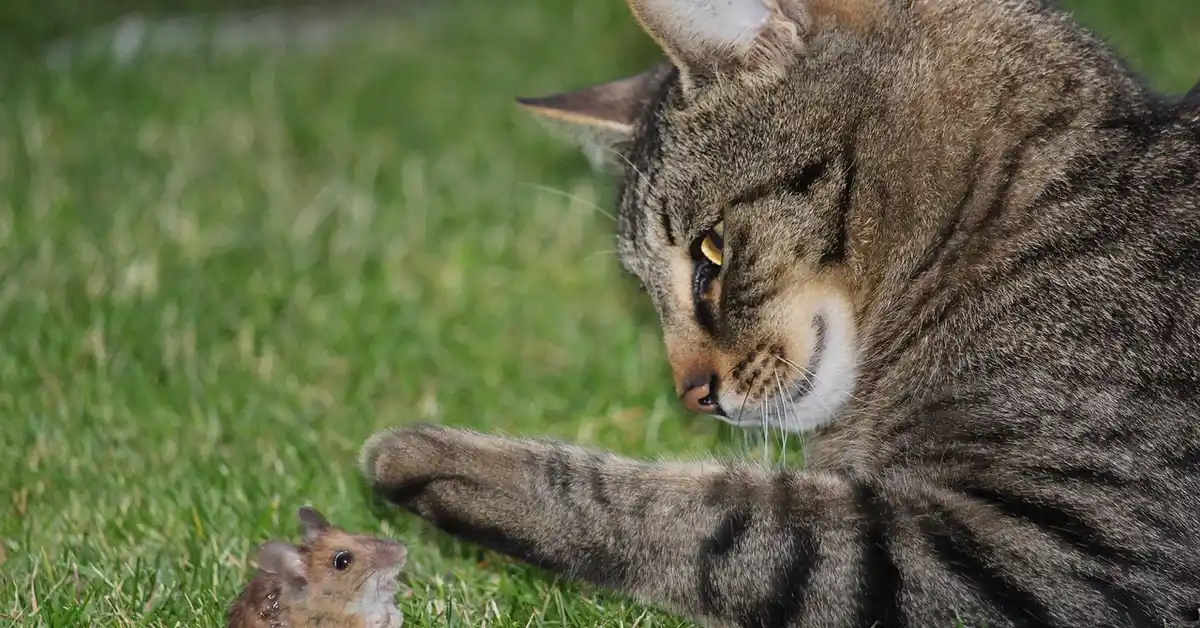
While a cat’s scent is a powerful warning signal, mice rely on a full sensory toolkit to stay safe from predators. Their survival hinges on combining smell with sharp hearing and motion detection to assess threats accurately. This multi-sense approach helps them react quickly, even when odors are faint or masked.
Mouse Hearing and Cat Detection
Mice possess incredibly sensitive ears that can detect frequencies far beyond human range, making them excellent at picking up subtle predator noises. They can hear the faint rustle of a cat’s pawsteps or the low rumble of a purr from several feet away, triggering an immediate freeze or flight response. In my own home, my mouse Jeffery often twitches and darts for cover at sounds I can barely perceive, showing how tuned-in they are to auditory dangers. This sensitivity means certain high-pitched or sudden loud noises can be particularly aversive to them. That makes it useful to know which specific sounds mice hate and why.
- High-frequency sounds: Mice hear up to 90 kHz, catching squeaks and movements we miss.
- Directional awareness: They pinpoint noise sources quickly to decide escape routes.
- Vibration sensitivity: Floor vibrations from a cat’s walk amplify the warning.
Mouse Vision and Movement Detection
Although mice have poor eyesight for details, their eyes are optimized for spotting motion in low light. They notice the swift, silent glide of a cat approaching long before details like color or shape become clear. This ability lets them react to visual cues even when other senses aren’t alerted, adding a crucial layer to their defense strategy.
- Peripheral focus: Their wide field of view helps detect movement from any angle.
- Low-light adaptation: Vision sharpens at dawn and dusk, common cat-hunting times.
- Quick processing: Brain signals prioritize motion over static images for fast escapes.
Why Mice Fear Cat Scent: The Science of Predator-Prey Interaction
The fear mice feel around cat odor is deeply rooted in biology, not just learned behavior. Cat saliva and urine contain specific proteins that bind to mouse olfactory receptors, sending instinctual panic signals to the brain. This reaction is an evolutionary gift that has kept mouse populations alert and alive through generations, making the scent an undeniable red flag. Yet mice can also learn social cues from humans and often become calmer around familiar handlers. In other words, predator odors trigger instinctive panic, but mice can still recognize and respond differently to their owners over time.
- Pheromone triggers: Chemicals like felinine in cat scent act as natural alarm signals.
- Stress hormone release: Exposure spikes cortisol, preparing mice for danger.
- Genetic memory: Even mice never exposed to cats show innate avoidance behaviors.
Do Mice Stay Away from Cats and Cat Smells?
Generally, mice will actively avoid areas where they detect cats or their scents, but curiosity and necessity can sometimes override caution. Hunger or nesting urges might lead a bold mouse like my Kenny to venture closer, though most will choose safer paths when possible. Their decisions balance risk against reward, shaped by individual personality and past experiences.
Can Mice Smell Cats in Your House?
Yes, mice can definitely smell cats inside your home, picking up traces from litter boxes, bedding, or even air currents. They use their keen noses to map out safe zones and danger areas, often avoiding rooms where cat scent is strongest. If you have both pets, you might notice your mice becoming more secretive or sticking to elevated hideouts to minimize encounters. Sometimes, mice might even leave if the cat smell is too overwhelming.
- Scent lingering: Odors cling to fabrics and vents, creating lasting warnings.
- Airflow patterns: Mice track smells carried through drafts or HVAC systems.
- Behavioral shifts: They may stash food differently or change activity times to avoid detection.
Risks to Pet Mice Living with Cats
Signs Your Pet Mice Smell Your Cat
Your mice will tell you they’ve detected a feline long before you see the cat. Watch for a sudden freeze in place, where every muscle locks and only their whiskers twitch as they sample the air. You might notice them sniffing incessantly at the air vents or a particular corner of their cage, pinpointing the origin of the threat. My mouse Jeffery, for instance, will immediately stop his cheerful berry-munching and dart into his hide at the first whiff of a cat, his usual soft squeaks falling completely silent.
Other unmistakable clues involve their social dynamics and daily routines. A normally bold, exploratory mouse like my Kenny might suddenly refuse to come out for playtime, a clear sign he’s sensing a predator nearby. You could see increased scent-marking, where they rub their flanks on cage furniture more frequently, attempting to overlay the foreign smell with their own familiar colony scent. Their eating and drinking patterns often shift, sometimes stopping entirely until they feel the coast is clear.
Stress Responses in Pet Mice from Cat Presence
Chronic stress from living under the perceived threat of a cat is a serious health risk for pet mice. Prolonged exposure to a cat’s scent can literally make a mouse sick, suppressing their immune system and making them susceptible to respiratory infections. This isn’t just a fleeting scare; it’s a constant, low-grade alarm that wears them down from the inside out. These are classic signs of fear and anxiety in mice, which can make them hide, stop eating, or show repetitive behaviours. If your pet seems scared, simple changes to their environment and gentle handling can greatly reduce stress and help them feel safe.
Look for these specific behavioral changes that indicate sustained stress:
- Barbering: You might find patches of missing fur, as stressed mice will over-groom themselves or their cage mates.
- Lethargy or Hiding: A mouse that once loved its wheel may abandon it, preferring to stay hidden in its nest for most of the day.
- Increased Aggression: The constant tension can cause squabbles within the mouse group, breaking down their normally peaceful social structure.
- Changes in Vocalization: Listen for a decrease in happy, chattering sounds or an increase in sharp, alarmed squeaks.
Protecting Pet Mice from Household Cats

Secure Enclosure Setup
The single most important factor for your mice’s safety and peace of mind is an impenetrable home. I will only ever use tanks with secure, locking metal mesh lids, as determined cats can and will learn to slide open simple clasps. A flimsy cage is an invitation for disaster, no matter how “gentle” your cat seems. In this ultimate guide to mouse cages, I’ll walk you through the best tank setups, lid types, and safety features to keep your mice secure. You’ll get clear recommendations so you can choose a cage that truly protects your pets.
Your enclosure defense should be multi-layered:
- Lid Locks: Use small luggage locks or specialized cage clips to secure the lid. A determined paw can create surprising leverage.
- Bar Spacing: If you use a barred cage, ensure the spacing is no more than 1/4 inch. A kitten’s paw can fit through shockingly small gaps.
- Elevated Placement: Never place the cage on the floor. A sturdy shelf or table is safer, but remember cats are excellent jumpers.
- No Top Accessories: Avoid placing hammocks or shelves directly against the top mesh, as this gives a cat a paw-hold and brings it closer to your mice.
Location and Scent Masking Strategies
Where you place your mice’s home is almost as critical as the home itself. Ideally, house your mice in a room that can be designated as a cat-free zone, providing a true sanctuary from the sights, sounds, and smells of their predator. This is especially important when keeping mice with other pets that might stress them out. A spare bedroom or a secure home office can be perfect for this.
If a separate room isn’t possible, you can use scent to create a psychological buffer.
- Strategic Smells: Wipe down the outside of the cage and the immediate area with white vinegar or a pet-safe enzymatic cleaner to neutralize cat saliva and pheromones.
- Familiar Scents: When cleaning the cage, always leave a portion of the old, unscented bedding to maintain a foundation of their own familiar smell.
- Air Purification: A good air purifier with a HEPA filter near the cage can help remove airborne dander and allergens, subtly reducing the overall “cat smell” in the environment.
Supervision and Boundaries
Vigilance is your best tool. Never, ever allow your cat to sit on top of the mouse cage, even if the lid seems secure; the vibration and shadow are terrifying for the animals inside. The goal is to minimize direct interactions to the point where your mice can almost forget the cat exists.
Establish firm rules for both yourself and your cat:
- Always close the door to the mouse room when you are not present to supervise.
- If your cat becomes fixated on the cage, gently redirect its attention with a toy or by moving it to another room. Do not scold, as this can increase tension.
- During out-of-cage playtime for your mice, ensure the cat is in a completely different part of the house. The stress of a sudden appearance could cause a mouse to bolt and hide or injure itself.
Can Cats and Mice Coexist in the Same Home?
It is possible, but it requires a fundamental shift in your perspective. You are not facilitating a friendship; you are managing a predator-prey dynamic for the entirety of their lives. The well-being of your mice must be the absolute priority in this arrangement, as they are the vulnerable party. This is especially important when male mice live together, since adult males can be highly territorial and prone to severe fighting. Cohousing males demands careful introductions, constant monitoring, and a plan to separate them if aggression occurs.
Success depends entirely on your commitment to creating and maintaining strict boundaries. My older mouse, Gregory, has lived his entire life with cats in the home, but he has never once seen one up close or been directly threatened. This peaceful coexistence is built on a foundation of consistent management, not on trusting the cat’s instincts. It can work, but it is a responsibility that demands constant attention and a proactive approach to your pets’ environments.
Frequently Asked Questions
Can mice smell cats through walls?
Yes, mice can often detect cat scents through walls due to their extraordinary sense of smell and the way odors travel via air currents and small gaps. Scents from a cat’s dander, saliva, or litter box can permeate through vents, under doors, or through porous materials, alerting your pet mice to the predator’s presence even without direct visual contact. This ability helps them map safe zones in your home, but it can also cause unnecessary stress if not managed properly.
Can rats and mice smell cats?
Both rats and mice possess highly developed olfactory systems that allow them to detect the scent of cats effectively. They share similar instincts to identify feline pheromones and other chemical signals as threats, triggering avoidance behaviors and stress responses. For pet owners, this means that housing either species with cats requires careful management to minimize scent exposure and ensure their well-being.
Do mice smell cats and stay away?
Mice generally do stay away from areas where they detect strong cat odors, as this is an innate survival mechanism to avoid predators. However, factors like the need for food, shelter, or exploration can sometimes override this caution, especially in domesticated settings. To keep your pet mice safe and stress-free, it’s best to limit their exposure to cat scents through secure housing and environmental controls.
Your Path Forward
While the instinctual connection between cats and mice is powerful, your thoughtful care creates a secure bubble where your pet mice can thrive. You now understand that a cat’s scent can be a significant stressor, but through strategic habitat placement and scent management, you can effectively shield your small companions from that anxiety.
Your awareness and proactive steps are the most powerful tools you have for ensuring your mice feel safe, happy, and completely at home. Trust in the environment you build and the routine you establish; your dedication is what truly allows their playful, curious personalities to shine through, undisturbed.
Further Reading & Sources
- r/CatAdvice on Reddit: Does cat scent scare mice? serious question.
- How Do Cats Smell Mice? – Petful
- Can Cats Smell Mice? | ABC Blog
Isabella is a passionate small pet enthusiast with over 8 years of experience in caring for mice. She loves sharing practical tips and heartfelt stories to help fellow mouse owners provide the best care for their tiny companions.
Understanding Mice Behavior