
Pattern Genes: How Markings Are Determined
Have you ever looked at your pet mouse and wondered what creates those beautiful spots, stripes, or solid colors on their fur? This guide will clearly explain the genetic factors that determine your mouse’s unique appearance, giving you a deeper appreciation for their individuality.
We will explore the fundamental principles of pattern inheritance, the specific genes responsible for common markings, and how environmental factors can subtly influence coat patterns.
Understanding the Genetic Foundation of Mouse Coat Patterns
What Marker Genes Actually Mean for Your Pet Mouse
Think of your mouse’s genes as a detailed instruction manual for building their entire appearance. Marker genes are the specific paragraphs in that manual that dictate exactly where pigment should be placed on their tiny body. This isn’t just abstract science; it directly influences the unique friend staring back at you from their enclosure.
When you understand these genetic instructions, you start to see your pet in a new light. That splash of white on their belly or the perfect stripe down their back isn’t random-it’s a carefully coded design. I’ve noticed this with my own mice; Jeffrey’s distinct white patches are a direct result of his particular genetic recipe, making him instantly recognizable and utterly unique in our little family.
How Pigmentation Genes Create Color and Pattern
The magic of mouse markings begins with two basic pigments: eumelanin for blacks and browns, and pheomelanin for yellows and reds. Pigmentation genes act like factory managers, deciding which type of pigment gets produced and in what quantity. They control the intensity, distribution, and even the timing of color deposition during hair growth.
Here is how the process unfolds:
- Gene signals determine the pigment type manufactured within specialized skin cells called melanocytes.
- These melanocytes then transfer the pigment granules into the growing hair shafts.
- The specific pattern emerges from where these melanocytes are located and how actively they function across the skin.
- Variations in this process create the stunning diversity of coats we see, from solid colors to complex brindles and spots.
The final coat is a living tapestry woven from these cellular instructions. Every single hair on your mouse tells a tiny part of their genetic story, a story you get to witness every day.
The Major Genes That Control Mouse Coat Patterns
Agouti Gene (ASIP): The Wild-Type Pattern Controller
The Agouti gene is the classic pattern you see in wild mice, a masterpiece of camouflage. This gene creates the “ticked” or “banded” appearance where each individual hair has multiple colors. Typically, the hair shaft will have a dark base, a yellow or red band in the middle, and a dark tip, unlike roan, spotted, or irregular markings.
Mice with the dominant Agouti allele display this beautiful banding, giving them a warm, brownish-gray “wild” look. The non-agouti (recessive) version results in a solid, self-colored coat because the band of lighter pigment is missing. This single gene switch is responsible for the fundamental difference between a mousy-brown coat and a sleek, solid black one. These agouti-based differences form the foundation of the base coat colors—agouti, black, and brown—seen in many mice. Other pigment genes can then modify or mask these base colors.
MC1R (Extension Gene): Black, Brown, and Red Pigments
The MC1R gene, often called the Extension locus, is the primary dial for dark pigment. This gene determines whether the dark pigment in your mouse’s coat will be black or a chocolate brown. It works by controlling the type of eumelanin produced.
Its different forms lead to distinct outcomes:
- The dominant form (E) allows for full black pigment expression.
- A mutation (e) can cause a recessive red or yellow coat by shifting production to pheomelanin.
- Another variant (e^t) creates a black-and-tan pattern, a personal favorite for its striking contrast.
KIT Gene: White Spotting and Piebald Patterns
If you’ve ever admired a mouse with charming white socks or a bold blaze on its face, you’re looking at the work of the KIT gene. The KIT gene is crucial for the development and migration of melanocytes, the very cells that produce pigment. When this gene has certain mutations, the melanocytes don’t reach all areas of the skin before the hair develops.
The areas they miss grow in as pure white. The amount of white can range from a few tiny toes to a mostly white coat with colored patches, a pattern known as piebald. My mouse Jeffrey is a great example, with his white body and carefully placed gray cap-a direct signature of his KIT gene configuration.
TYRP1 and SLC45A2: Dilution and Color Intensity
These genes don’t change the pattern itself but dramatically alter its intensity and tone. Think of TYRP1 and SLC45A2 as the volume knobs for your mouse’s base coat color. They work by diluting the pigment, creating softer, paler versions of standard colors.
A mutation in the TYRP1 gene (the brown locus) changes black pigment to a rich chocolate brown. A mutation in the SLC45A2 gene (the cream/ino locus) can dilute colors even further, transforming black to a pale gray and brown to a creamy beige. This is how you get those beautiful, soft-looking blue or lilac mice from a genetic foundation that would otherwise be much darker.
EDNRB Gene: Additional Spotting Variations
The EDNRB gene offers another pathway to creating spotted and piebald patterns, sometimes interacting with the KIT gene. This gene influences the survival of melanocyte stem cells, which in turn affects how much white appears on the adult coat. Different mutations here can lead to a wide spectrum of white spotting.
From a small belly spot to a panda-like pattern with a colored head and rump on a white body, the EDNRB gene adds another layer of complexity. It’s a reminder that a mouse’s final appearance is often a collaborative effort between several genetic instructions, all working in concert.
How Pattern Development Happens: From Genes to Visible Markings
Melanocyte Migration During Mouse Development
Before your mouse even has fur, the blueprint for its future coat is being drawn by tiny cells called melanocytes. These pigment-producing cells originate in the neural crest during early embryonic development, a bit like settlers moving from a central homeland to populate new territory. The incredible journey these cells undertake across the embryo’s skin ultimately decides where color will appear on your adult pet.
I’ve noticed this process firsthand; my mouse Jeffery has a perfectly symmetrical white belly, a direct result of melanocytes not completing their migration to his underside. The path and final settlement of these cells are guided by a complex mix of genetic signals. Any hiccup in this cellular migration can lead to the beautiful and unique markings that make each mouse an individual.
The Turing Mechanism: Mathematical Patterns in Mouse Fur
It might sound like science fiction, but the stunning spots and stripes on your mice are partly the work of a mathematical process proposed by Alan Turing. This mechanism involves two imaginary chemicals: an activator that tells a spot to form, and an inhibitor that tells the surrounding area to stay clear. Think of it like a biological game of dot-to-dot, where the final picture is a gorgeous brindle or broken-marked coat, unlike the solid-colored mice you often see.
This activator-inhibitor reaction-diffusion system creates stable, repeating patterns from initially uniform conditions. The spacing and size of your mouse’s markings are a direct physical manifestation of this hidden mathematical dance playing out on their skin. It’s a beautiful reminder that nature often follows elegant, underlying rules.
Gene Regulation and Enhancers: Turning Patterns On and Off
Genes for color and pattern don’t just turn on randomly; they are controlled with exquisite precision by regulatory switches called enhancers. These DNA sequences act like volume knobs and timers, telling a pigment gene exactly when, where, and how strongly to express itself. A single enhancer might be responsible for ensuring a colored stripe runs only down your mouse’s spine and nowhere else.
Mutations in these regulatory regions can have dramatic effects without breaking the color genes themselves. It’s the sophisticated coordination of these genetic switches that creates sharp boundaries between a white sock and a colored leg, or a perfectly placed blaze on the forehead. The precision is breathtaking.
Gene Interactions: Why Your Mouse Looks the Way It Does
How Dominant and Recessive Alleles Shape Patterns
The classic concept of dominant and recessive genes is your first clue to predicting a mouse’s appearance. A dominant allele only needs one copy to express its trait, while a recessive allele needs two. This simple “voting system” is why you can get a spotted mouse from two solid-colored parents if both carry the hidden recessive spotting gene. A visual guide to mouse color genetics outcomes lays out how different allele combinations translate into coat colors and patterns, making prediction easier. Such charts and diagrams show the likely offspring phenotypes for given parental genotypes.
Consider these common interactions:
Understanding this basic inheritance helps you appreciate why a particular mouse in your mischief stands out from its cage mates.
When One Gene Hides Another: Epistasis in Action
Sometimes, one gene can completely mask the effect of another gene at a different location-a phenomenon called epistasis. The most dramatic example is the albino gene. An albino mouse carries genes for specific patterns and colors, but you can’t see any of them because the albino gene blocks all pigment production entirely.
It’s like having a beautiful painting hidden under a layer of white paint. This is why you can breed two albino mice together and suddenly get colored babies; the albino gene was masking the colorful patterns they were always genetically carrying. It’s a powerful reminder that what you see isn’t always the full genetic story.
Polygenic Patterns: Multiple Genes Working Together
Most of the lovely variation you see in pet mice isn’t from single genes, but from the combined effect of many-this is polygenic inheritance. Traits like the exact amount of white spotting, the subtle shading of a color, or the distribution of dark points are all orchestrated by a committee of genes. This collaborative genetic effort is what creates the nearly infinite variety of markings, ensuring no two mice are ever exactly alike.
My three boys-Kenny, Gregory, and Jeffery-each have a unique expression of white on their paws and bellies thanks to this polygenic influence. The subtle blending and shading in their coats are a testament to dozens of genes working in harmony to create a one-of-a-kind masterpiece. It’s this complex collaboration that makes mouse watching so endlessly fascinating.
Observing Genetic Patterns in Your Pet Mice
Identifying Common Coat Patterns and What They Tell You
Watching your mice scurry around their enclosure, you’ll start to notice the beautiful diversity in their fur. Recognizing these common patterns gives you a direct window into the genetic instructions each mouse carries. These coat patterns form the basis for identifying and classifying fancy mouse breeds. Understanding them will help you recognize breed standards and genetic traits in your mice. Here are some you’re likely to see:
- Self: A single, solid color from nose to tail. My Gregory is a perfect example with his rich, dark brown coat. This pattern suggests a relatively straightforward genetic combination for color.
- Banded or Capped: A colored “cap” on the head and a band across the shoulders, with a white body. This is controlled by specific genes that restrict where pigment is deposited.
- Broken Markings: A mix of colored and white patches in a seemingly random arrangement. The size and placement of these spots are a genetic lottery, making each broken-patterned mouse wonderfully unique.
- Roan: A salt-and-pepper effect where white hairs are evenly mixed with colored ones. This pattern can sometimes change as the mouse ages, with more white hairs appearing over time.
Why Littermates Can Look Completely Different
It’s fascinating to see a litter where one pup is solid black, another is spotted, and a third is a pale tan. This incredible variation happens because each parent mouse contributes a unique shuffle of their own genes. Think of it like dealing cards from two well-shuffled decks; every single pup gets a different genetic hand. They inherit separate sets of instructions for color, pattern, and dilution from each parent. One might get the gene for black fur from mom and the gene for white spotting from dad, while its sibling gets the opposite combination. This genetic recombination is why my white Jeffery can be from the same litter as a much darker mouse. To make sense of that, a quick genetics 101 tour helps. Terms like allele, genotype, phenotype, and dominant versus recessive explain why certain coat colors appear in mice.
Unexpected Markings: Understanding Genetic Surprises
Sometimes, a mouse appears with a marking you’ve never seen in its parents or grandparents. These genetic surprises are often hidden traits, carried silently for generations, that finally find the right partner gene to express themselves. A recessive gene for a rare pattern can pass down unnoticed until two mice carrying that same hidden instruction breed. Environmental factors in the womb, like temperature fluctuations, can also subtly influence how strongly a color gene is expressed. Don’t be alarmed if a patch of fur seems to change shade; this is a normal part of your mouse’s genetic story unfolding. To make sense of these surprises, it’s helpful to study specific color loci—commonly referred to as b, c, d and p—which govern base pigment, pigment production, dilution and spotting. Knowing the alleles at those loci helps predict which recessive or modifier traits might surface in offspring.
Comparative Genomics: What Mouse Genetics Teaches Us
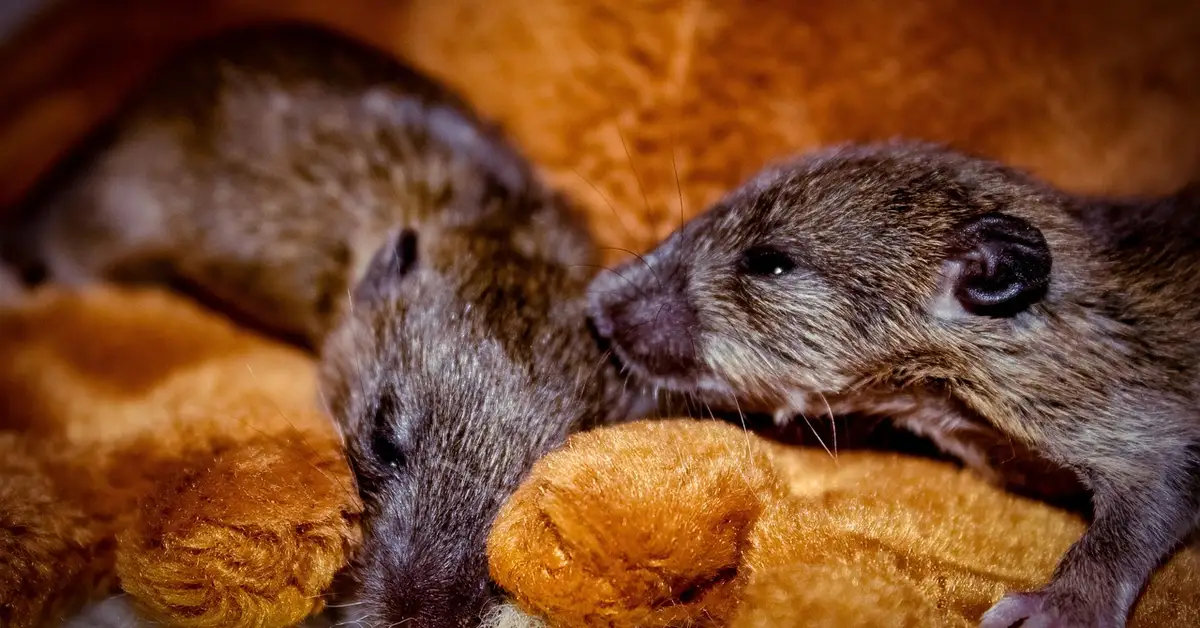
Mouse Patterns Compared to Other Pet Species
The genetics of color and pattern provide a fascinating link across the animal kingdom. The very same gene that creates a tuxedo pattern in your pet mouse is closely related to the one that paints a suit on a fancy rat or creates the classic markings of a Dutch rabbit. This gene, often called the “piebald” or “spotting” gene, limits where pigment cells migrate during embryonic development. While the exact result varies between species-a band on a mouse versus a saddle on a rabbit-the underlying biological mechanism is remarkably similar. Hamsters and gerbils follow different genetic rules, which is why you don’t see the same kind of broken patterns you find in mice.
How Research on Mouse Coat Genes Benefits Pet Owners
The extensive scientific research on laboratory mice has given pet owners an incredible gift: a deep understanding of our pets’ biology. Decades of genetic mapping mean we can often predict potential health issues just by looking at a mouse’s coat color and pattern. For instance, the gene complex responsible for some extreme white spotting is sometimes linked with a higher prevalence of megacolon, a serious digestive condition. This knowledge allows a vigilant owner to monitor for early symptoms. This research also helps us appreciate the complexity behind what seems simple, like the cheerful white patches on my Jeffery, reminding us that their beauty is rooted in a profound biological blueprint.
Frequently Asked Questions
What are marker genes?
Marker genes are specific genes that act as indicators or controllers for particular biological traits, such as coat patterns and colors in pet mice. In the context of your mouse’s appearance, these genes provide instructions for where and how pigments like eumelanin and pheomelanin are deposited during development, resulting in unique markings like spots, stripes, or solid fur. Understanding these genes helps you appreciate the genetic blueprint behind your pet’s individuality, as they directly influence traits you can observe every day.
What are marker genes in A Level Biology?
In A Level Biology, marker genes are often studied as genes used to track inheritance patterns or identify specific traits in organisms, such as those controlling visible characteristics like coat color in mice. For example, they might be discussed in genetics modules to illustrate how dominant and recessive alleles interact to produce variations in offspring. This educational focus helps students grasp fundamental genetic principles by relating them to tangible examples, like the Agouti or KIT genes that determine markings in pet mice.
What marker genes are used to identify cell types?
Marker genes are utilized in biology to identify specific cell types by expressing unique proteins or traits that distinguish them from others. In pet mice, genes like KIT or EDNRB can serve as markers for melanocytes-the cells responsible for pigment production-helping researchers and enthusiasts understand how these cells migrate and function to create coat patterns. This application highlights the role of genetics in cellular identification, which can deepen your insight into how your mouse’s fur patterns develop from a cellular level.
Final Thoughts
Getting to know the genetics behind your mouse’s beautiful markings adds a wonderful new layer to pet ownership. This knowledge transforms a simple observation into a deeper appreciation for the unique little life in your care. You start to see the living art of heredity playing out right in your own habitat. Use this pet mouse colors & markings guide to identify common colorations and patterns. It also explains the genetics behind them and gives care tips tailored to different coat types.
Whether your mouse is a solid, spotted, or brindle beauty, their pattern is a special part of their identity. Embrace the delightful surprise of genetics and enjoy every mark and spot that makes your mouse one of a kind. The real magic isn’t just in predicting patterns, but in cherishing the wonderful individual you get to share your home with.
Further Reading & Sources
- Pattern formation – Wikipedia
- Drosophila and the Molecular Genetics of Pattern Formation: Genesis of the Body Plan – Molecular Biology of the Cell – NCBI Bookshelf
- Understanding Pattern Formation in Embryos: Experiment, Theory, and Simulation | Journal of Computational Biology
Isabella is a passionate small pet enthusiast with over 8 years of experience in caring for mice. She loves sharing practical tips and heartfelt stories to help fellow mouse owners provide the best care for their tiny companions.
Mice Genetics