
Decoding Mouse Color Genetics: The A, B, C, D, P Loci Explained
Have you ever looked at your mice’s beautiful coats and wondered how two plain-colored parents could produce such a kaleidoscope of patterns and shades in their offspring? The secret lies in a fascinating genetic blueprint known as the locus system, a code that directs every detail of your pet’s appearance.
This guide will demystify the core genetic instructions that paint your mouse’s fur. You will learn the specific roles of the five main loci-A, B, C, D, and P-and how their combinations create the stunning variety seen in pet mice today.
Why Your Mouse’s Coat Color Matters More Than You Think
Your mouse’s beautiful coat is more than just a pretty feature; it’s a direct window into their genetic blueprint. Observing their specific color and pattern can provide subtle clues about their overall health and even their inherent temperament. I’ve noticed that my light gray mouse, Kenny, has a boundless energy that seems linked to his specific genetic makeup, while my older, darker Gregory is far more sedate.
The genes responsible for pigmentation are often linked to other physiological processes. Certain color genes can influence neurological development, which may manifest in different activity levels or responses to stress. A white mouse like my Jeffery, for instance, might be more sensitive to bright light, influencing where you place their cage for maximum comfort.
Beyond health, understanding color genetics deepens your bond with your pet. Recognizing the complex dance of alleles that created your unique companion fosters a greater appreciation for their individuality. It transforms them from a “beige mouse” into a living, breathing story written in DNA. A pet mouse colors and markings guide can help you identify those patterns and what they reveal about lineage. It also gives practical tips for recognizing and caring for different coat types.
The Basics: What is a Locus and How Does it Work?
Think of a locus as a specific street address on a mouse’s chromosome. Each locus is a dedicated spot for a particular kind of gene, like the one that controls whether a mouse will be black or brown. It’s a fixed location that always handles the same type of genetic instruction, no matter which mouse you’re looking at.
At every locus, a mouse inherits two alleles—one from its mother and one from its father. These alleles are like different recipes for the same dish, and they interact to determine the final outcome you see on your pet. One allele might be dominant, loudly stating its instructions, while the other is recessive, only showing up if both copies are the same. This guide will walk you through the basics of dominant vs. recessive genes and how they determine which traits appear. With these rules, you’ll be better able to predict and understand the appearances you observe in your pet.
The magic happens in how these loci work together. The combined instructions from the A, B, C, and other loci mix and match to create the stunning variety of mouse coats we adore. They don’t work in isolation; they are a collaborative team building your mouse’s appearance from the ground up.
How Alleles Interact to Create Your Mouse’s Unique Color
The interaction between alleles follows some predictable patterns, which is what allows breeders and enthusiasts to anticipate potential outcomes. A dominant allele only needs one copy to express itself, effectively masking the presence of a recessive allele. For a trait to be expressed recessively, your mouse must inherit two identical copies of that allele.
Here is a simple breakdown of the main types of interactions:
- Complete Dominance: One allele completely overpowers the other. The dominant trait is what you see.
- Incomplete Dominance: The two alleles blend together, creating an intermediate phenotype that is a mix of both.
- Codominance: Both alleles are expressed fully and independently, resulting in a coat that shows both traits distinctly.
Let’s use the Agouti (A) locus as a real-world example. The dominant ‘A’ allele creates the classic agouti banding on each hair, while the recessive ‘a’ allele results in a solid, self-color like black. A mouse with one ‘A’ and one ‘a’ will appear agouti because the ‘A’ allele is dominant.
These interactions are happening simultaneously across all the color loci. The final color of your mouse is the breathtaking result of a complex genetic conversation happening at multiple levels. It’s a beautiful reminder that what we see is just the surface of a deeply intricate biological process.
The A Locus: Understanding the Agouti Pattern in Your Mouse
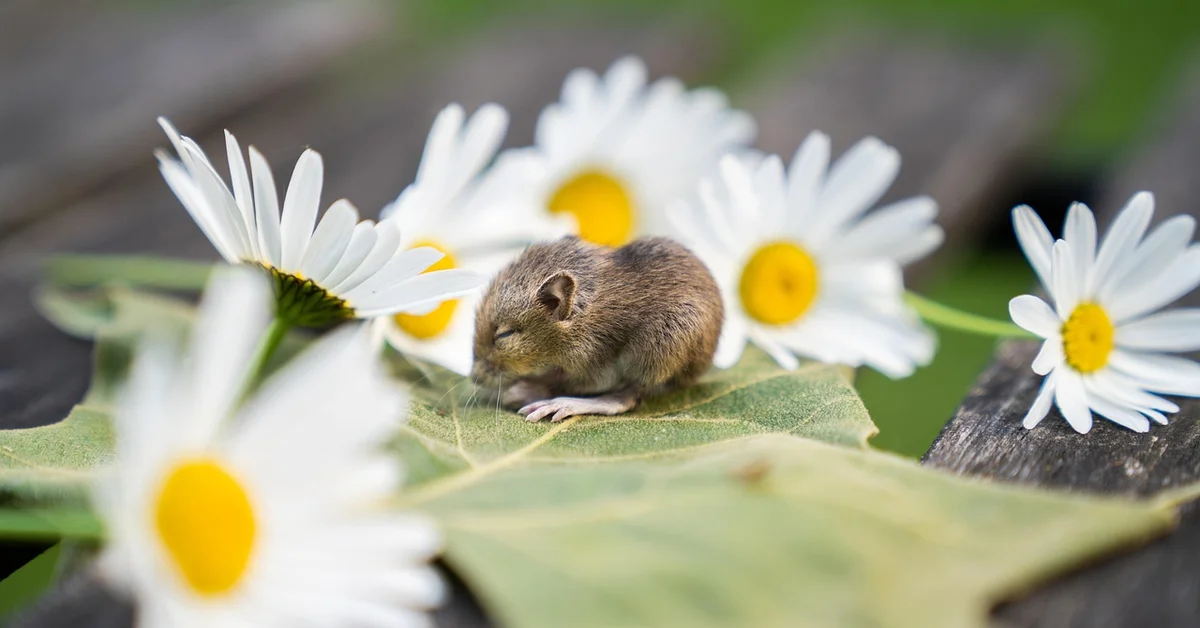
Think of the A locus as the master switch for the classic “wild mouse” look. This gene controls whether each individual hair on your mouse’s coat is a single, solid color or has a beautiful banded pattern. This single gene is responsible for the dramatic difference between a mouse that looks like it just scurried out of a field and one with a sleek, uniform coat.
If your mouse carries the dominant Agouti (A) allele, you’ll see that signature banding. Each hair will have a dark base, a middle band of lighter color (often yellow or orange), and a dark tip. This creates a peppered, salt-and-pepper effect across the entire body, which is nature’s perfect camouflage. My curious little Kenny is a perfect example of this; his light gray fur has subtle bands that catch the light when he’s exploring, making his coat look alive and dynamic.
The alternative is the recessive non-agouti (a) allele. When a mouse has two copies of this, the banding mechanism is turned off. Every hair grows as a single, solid color from base to tip, resulting in a sleek, self-colored mouse. You’ll see this in jet-black mice or rich, chocolate-brown mice where the color is deep and uniform without any frosted or grizzled appearance, especially in solid-colored mice.
What the A Locus Means for Your Pet’s Appearance
- Agouti (A): Produces the wild-type, banded hair. Colors include golden brown, gray, and fawn.
- Non-Agouti (a): Creates a solid, self-colored coat. This gene allows for the deep, uniform black of a “black self” mouse.
The B Locus: Why Your Mouse is Black or Brown
The B locus is all about the type of dark pigment, or eumelanin, your mouse produces. It’s a simple but powerful switch that changes the very base of your mouse’s dark coloring. This gene decides if your mouse will be a sleek, inky black or a warm, milk-chocolate brown.
The dominant allele here is Black (B). When this gene is doing its job, it guides the creation of black eumelanin granules. These granules are dense and dark, leading to a coat that can appear truly black or form the dark portions of an agouti pattern.
The recessive version is Brown (b). When a mouse inherits two copies of this gene, the body produces a diluted, browner version of eumelanin instead of a true black. The change from black to brown pigment can soften a mouse’s entire appearance, giving them a gentler, more approachable look. It’s fascinating to see how this single change can make such a visual difference. This difference reflects dominant vs. recessive inheritance: a dominant B allele produces black and will mask a b allele, so brown only appears when the mouse is homozygous bb. My older mouse, Gregory, has a dark brown coat that feels richer and warmer than a stark black, and it’s all thanks to this locus.
The B Locus Color Outcomes
- Black (B): Produces standard black pigment. This is the most common and dominant form.
- Brown (b): Dilutes black pigment to a chocolate brown. You need two copies (bb) to see this color.
The C Locus: From Full Color to Complete Albinism
The C locus is perhaps the most dramatic in mouse color genetics, as it controls the very ability to produce pigment at all. Think of it as a series of dimmer switches for color intensity, ranging from full brightness all the way to completely off. This locus doesn’t change the color itself, but rather how much of that color is expressed across the entire body. In genetics 101 terms, the C locus consists of different alleles whose genotypes (homozygous or heterozygous) determine whether pigment is produced. Understanding basic terms like locus, allele, genotype and phenotype makes it easier to follow mouse coat-color genetics.
Full color (C) is the dominant, normal state where pigment production works at full capacity. A mouse with this can display any of the rich, dark colors dictated by the other loci.
The magic-and the heart of albinism-lies in the recessive alleles. The most extreme is albino (c). A mouse with two copies (cc) cannot produce any pigment whatsoever. This results in the classic pink-eyed white mouse, with pure white fur and red eyes because the absence of pigment allows the blood vessels to show through. Their vision is often poorer and they can be sensitive to bright light.
But there are intermediate steps on this pathway! Other alleles at the C locus, like chinchilla (c^ch) and extreme dilution (c^e), cause partial reductions in pigment. A chinchilla mouse, for instance, will have a paler, cooler-toned coat because it reduces yellow pigment, while black pigment remains mostly intact. My smallest mouse, Jeffery, is a bright white, and understanding this locus helped me appreciate the genetic story behind his cheerful, snow-white appearance and pink eyes.
The C Locus Spectrum
- Full Color (C): Normal, full pigment production.
- Chinchilla (c^ch): Reduces yellow and red pigments, creating a grayish or silvery coat.
- Extreme Dilution (c^e): Greatly reduces all pigments, leading to a very pale, creamy mouse.
- Albino (c): Completely eliminates all pigment, resulting in a white coat and pink eyes.
The D Locus: How Dilution Changes Your Mouse’s Coat Intensity
Think of the D locus as a volume knob for your mouse’s fur color. A single gene here determines whether the coat pigment is presented at full strength or softened into a more muted, delicate version. The dominant allele (D) gives you the rich, deep color you’d expect, while the recessive pair (dd) activates the dilution effect, subtly lightening the entire coat. This is a simple example of how genes can exist in different forms called alleles, which produce different trait outcomes. Recognizing alleles like D and d is key to understanding how inherited characteristics are passed down and expressed.
You aren’t just seeing a lighter shade; you’re witnessing a change in how pigment granules are distributed within each hair shaft. This dilution doesn’t create a new color but instead washes out the existing one, transforming a vibrant chocolate brown into a soft, dove-gray beige. It’s a beautiful, understated transformation that can make a mouse’s coat look almost dusted with powder.
From my own experience, watching this gene express itself is fascinating. My mouse Gregory, for instance, has the full, undiluted expression of his dark brown coat. If he carried the recessive dilute genes, his dignified dark cloak would be a much softer, warmer taupe, changing his entire appearance while keeping his calm personality perfectly intact. It’s a simple illustration of inheritance patterns—how dominant and recessive alleles inherited from his parents determine which traits are expressed. Observing Gregory makes it easy to see how traits are passed down through generations.
Visualizing the Dilution Effect
- Black becomes Blue: A sleek black coat transforms into a elegant slate blue-gray.
- Chocolate becomes Lilac or Dove: A rich brown fades to a beautiful pale, pinkish-gray.
- Agouti becomes Silver Agouti: The classic banded wild-type fur lightens, creating a frosted, silvery look.
The P Locus: Understanding Pink-Eyed Dilution
The P locus creates one of the most distinctive and widely recognized looks in fancy mice: the pink-eyed mouse. This gene doesn’t just affect eye color; it performs a double-duty dilution on the coat, creating a unique and often paler version of the base color. The dominant (P) allele results in dark, black eyes, while the recessive combination (pp) gives us those signature pink or ruby-red eyes. A visual guide to mouse color genetics outcomes illustrates these effects with diagrams and example phenotypes, showing how P interacts with other loci. It can be used to predict which genotype combinations will produce the range of pink‑eyed and diluted coats.
Why are the eyes pink? It’s not because of a red pigment. The pink-eyed dilution gene drastically reduces the amount of pigment throughout the entire body, including the eyes, allowing the blood vessels at the back of the eye to show through. This creates that beautiful ruby glow, a trait often paired with a lighter, more “chalky” looking coat.
This is a gene I handle with extra care. Mice with pink-eyed dilution can sometimes have slightly more sensitive vision in very bright light, so I always provide plenty of cozy, dark hides in their enclosure. My little Jeffery, with his bright white fur, doesn’t have this gene, but if he did, his white coat would remain white, but his dark eyes would become a startling, beautiful pink.
The Combined Impact of Pink-Eyes
- Coat Lightening: Fur appears less intense, often with a chalky or milky quality.
- Eye Color: Eyes range from light pink to a deep, dark ruby red.
- Common Combinations: You’ll often see this with fawn, champagne, and certain white markings.
How These Five Loci Work Together in Your Mouse
Think of your mouse’s coat color as a recipe where the A, B, C, D, and P loci are the main ingredients. No single gene works in isolation; they mix and interact to create the final, beautiful color you see. The Agouti (A) locus provides the foundational pattern, while the Brown (B) locus determines whether the pigment is black or brown. The Color (C) locus acts like a dimmer switch for color intensity, and the Dilute (D) and Pink-Eyed Dilution (P) loci lighten everything up. When you see a pale, creamy mouse with pink eyes, you’re likely seeing the combined effects of the C, D, and P loci all working at once.
Reading Your Mouse’s Color Genotype from Their Appearance
You can’t send your mouse for a DNA test, but you can become a detective of their fur. By observing specific visual clues, you can make a very educated guess about their underlying genetics. Start with the belly fur. A clean, light belly often points to the dominant Agouti (A) gene, while a belly the same color as the back suggests a non-agouti (aa) mouse. Next, look at the base color. Is it a rich black or a chocolatey brown? A brown coat means your mouse carries two recessive ‘b’ alleles at the B locus.
Here is a simple guide to help you decode what you see:
- Dark mouse with a light belly and dark eyes: Likely genotype is A_ B_ C_ D_ P_. This is your standard “wild” agouti.
- Solid black mouse from nose to tail: Probably aa B_ C_ D_ P_. The non-agouti gene prevents the banded hairs.
- Chocolate brown mouse (like my Gregory): Look for aa bb C_ D_ P_. The recessive ‘b’ gene changes black pigment to brown.
- Extremely pale, creamy color with pink eyes: This is a classic cc combination at the Color locus, which overrides almost everything else.
- Soft, grayish-blue or light beige tones: Your mouse likely carries the recessive ‘d’ and/or ‘p’ genes, which dilute the base color.
Common Pet Mouse Colors Explained Through the Locus System
Let’s apply this knowledge to the colors you most often see in pet stores and from breeders. It’s fascinating to trace these popular looks back to their genetic roots.
- Agouti (Wild Type): The classic “mouse” color. Genotype: A_ B_ C_ D_ P_. The Agouti gene gives each hair a dark base and a golden band, the B gene allows for black pigment, and the C gene provides full color.
- Black: A sleek, solid black coat. Genotype: aa B_ C_ D_ P_. The non-agouti (aa) gene is the star here, switching off the banded hair pattern and allowing the black pigment from the B gene to express uniformly.
- Chocolate: A rich, solid brown. Genotype: aa bb C_ D_ P_. This color requires both the non-agouti (aa) gene and the recessive brown (bb) gene, which transforms the black pigment into a chocolatey brown.
- Dove / Blue: A soft, grayish color. Genotype: aa B_ C_ dd P_. The magic is in the Dilute (dd) gene, which lightens the black pigment to a misty gray or slate blue.
- Siamese / Himalayan: A cream body with darker points on the nose, ears, and feet. Genotype: aa B_ cchcch D_ P_. This is controlled by the Color locus. The cch allele is temperature-sensitive, producing color only on the cooler parts of the body.
- Pink-Eyed White (Albino): Pure white fur and pink eyes. Genotype: _ _ cc _ _ _. The recessive ‘c’ allele on the Color locus is the key, as it completely prevents the production of all pigment.
- Silver Fawn: A beautiful pale orange with dark eyes. This complex color often involves a combination of the Agouti pattern with the Pink-Eyed Dilution (pp) gene, which lightens the orange and yellow pigments specifically.
Frequently Asked Questions
What are the primary loci that control mouse coat color?
The primary loci in mouse color genetics are specific points on chromosomes where genes that influence pigmentation are located. While the A, B, C, D, and P loci are the core five discussed for basic coat colors, there are additional loci that can affect patterns, markings, and other traits, such as the E locus for extension of dark pigment or the S locus for white spotting. Understanding these loci helps pet owners appreciate the genetic diversity behind their mouse’s appearance without needing to delve into complex science.
How does each locus specifically influence color outcomes?
Each locus has a distinct role: the A locus controls whether the coat has banded (agouti) or solid hairs, the B locus determines if dark pigment is black or brown, the C locus acts as a pigment intensity switch (from full color to albinism), the D locus dilutes the base color to softer shades, and the P locus causes pink-eyed dilution along with coat lightening. These loci don’t work in isolation; for example, the C locus can override others in albino mice, while the D and P loci often combine to create paler, chalky tones in the fur.
What is the genetic logic behind loci interactions in color genetics?
The logic behind loci interactions involves dominance, recessiveness, and complementary effects, where the outcome from one locus can modify or enhance another. For instance, a recessive allele at the C locus (cc) leads to albinism, masking the expressions of the A, B, D, and P loci entirely. Similarly, the D and P loci both dilute color but through different mechanisms-D affects pigment distribution, while P reduces pigment overall-and when present together, they can produce extremely light-colored mice with pink eyes.
Your Path Forward
Grasping the A, B, C, D, and P loci gives you a wonderful tool to predict and appreciate the beautiful variety in your mice. You are no longer just seeing a color; you are seeing a story written in their genes, a combination of dominant and recessive traits that makes each mouse unique.
Use this knowledge to observe your own pets with fresh eyes and delight in the genetic results of your careful pairings. The real magic happens when this science deepens the bond with your curious companions, adding a rich layer of understanding to the daily joy they bring.
Further Reading & Sources
- Mouse Genetics
- Genetics is complicated: mouse edition | Tough Little Birds
- AFRMA – Fancy Mouse Genes, Black-based Colors
Isabella is a passionate small pet enthusiast with over 8 years of experience in caring for mice. She loves sharing practical tips and heartfelt stories to help fellow mouse owners provide the best care for their tiny companions.
Mice Genetics