
Wire Cages for Mice: Weighing the Benefits, Risks, and Bar Spacing Needs
Are you feeling overwhelmed by the choices for your mouse’s home, unsure if a wire cage will keep them safe and happy? I’ve been there too, watching my own mice like the adventurous Kenny test every corner of their enclosures, and I’m here to help you navigate this decision with confidence. This guide breaks down the realities of wire cages so you can provide a secure and stimulating environment tailored to your pet’s needs.
We’ll dive into the clear advantages of wire cages, including superior airflow and easy interaction opportunities, alongside the potential downsides such as escape risks and bar chewing habits, plus the non-negotiable bar spacing measurements that prevent accidents and ensure your mice stay safely inside their habitat.
Why Bar Spacing Matters for Mouse Cage Safety
Think of bar spacing as the front door to your mouse’s home. Getting this single measurement wrong can turn a safe habitat into an escape route or a dangerous trap. Mice are incredible contortionists, capable of flattening their ribcages and skulls to squeeze through openings that seem impossibly small. The right spacing is your first and most critical line of defense, ensuring your curious companions stay secure inside their environment where they belong.
How to Measure Bar Spacing Correctly
Don’t rely on the product description alone. You need to physically verify the gap with a ruler or a set of calipers for absolute accuracy. I keep a small ruler in my pet supply drawer specifically for this purpose. Here is the simple, foolproof method I use for every new cage or accessory.
- Place your measuring tool directly against the bars.
- Measure the clear distance between the inside edges of two parallel bars.
- Take this measurement in at least three different spots on the cage, as manufacturing can be inconsistent.
- The largest measurement you find is the one that matters for safety.
For adult mice, you are looking for a maximum of 1/4 inch, or about 6 millimeters. For younger or very small mice like my Jeffery, 1/2 inch spacing is an immediate and absolute no-go. Any gaps that size are potential entry points — check around pipes, vents, door frames, windows, foundation cracks and rooflines. Once inside, mice often hide and nest in wall voids, attics, basements, insulation and cluttered storage areas.
What Happens When Bar Spacing Is Too Wide
A gap that seems minor to you is a wide-open highway for a mouse. An improper cage can lead to a heartbreaking chain of events that is entirely preventable. I learned this the hard way years ago with a different mouse who found a weak spot in an old cage. The consequences extend far beyond a simple escape.
- Escape and Loss: A loose mouse in your home faces countless dangers-electrical wires, toxic substances, falls, and predators like other pets.
- Injury and Entrapment: A mouse can get its head or limbs stuck while trying to squeeze through. This can lead to broken bones, severe friction burns, or strangulation.
- Chronic Stress: Even if they don’t escape, constantly testing the boundaries of a poorly spaced cage is mentally exhausting and stressful for your pet.
My older mouse, Gregory, is a calm fellow, but even he will investigate a gap that promises a new adventure. It’s simply in their nature to explore, which is why our job is to make that exploration safe.
Advantages of Wire Cages for Pet Mice
When selected with the correct bar spacing, wire cages offer some fantastic benefits that other enclosure types simply can’t match. The right wire cage creates a wonderfully interactive and healthy living space that both you and your mice will appreciate. The airflow and climbing opportunities are, in my experience, top-tier for their wellbeing. This ultimate guide to mouse cages walks you through ideal bar spacing, cage size, and essential accessories. Use it to choose and set up the perfect wire cage for your mice.
- Superior Ventilation: The open design allows for excellent air circulation, which helps whisk away ammonia from urine and prevents the buildup of humidity. This is vital for preventing respiratory issues, to which mice are very prone.
- Unbeatable Climbing Structures: Mice are natural climbers. The vertical bars provide a perfect framework for them to scale, explore, and exercise, turning the entire walls of their home into a playground.
- Easy Interaction and Visibility: You can see your mice easily from all angles, and they can see you. This open environment helps with socialization and allows you to quickly monitor their health and behavior.
- Simple Customization: It’s incredibly easy to hang water bottles, attach hammocks, and secure toys directly to the bars, letting you create a rich, multi-level environment without much fuss.
Watching Kenny excitedly scale the side of his cage to reach a new hanging treat is a joy. That kind of natural, energetic behavior is a direct result of providing a habitat that suits their instincts.
Drawbacks of Wire Cages for Mice

The Wire Flooring Problem and How to Fix It
Wire mesh floors, a common feature in many cages, present a significant risk to your mouse’s delicate feet. These grids can cause a painful condition known as bumblefoot, which is an infection that starts from tiny pressure sores and abrasions. I learned this the hard way with a previous mouse who developed a slight limp; a quick switch to a solid surface cleared it up, but it was a stressful lesson. Their tiny feet simply aren’t built for constantly walking on an uneven, hard surface.
Fortunately, this major drawback has a straightforward solution. You don’t need to discard a wire-bottomed cage entirely. The most effective fix is to completely cover the wire floor with a solid, easy-to-clean material. Here are your best options:
- Plastic Corrugated Sheets: These are my personal favorite. They are inexpensive, can be cut to size with scissors, and are simple to wipe clean or replace entirely.
- Plexiglass or Acrylic Panels: A more permanent and sturdy solution that provides a perfectly smooth walking surface.
- Durable Cardboard: A good temporary fix, but it will need frequent replacement as it absorbs moisture and can be chewed.
Simply measure the cage’s floor, cut your chosen material to fit snugly, and place it directly over the wire mesh. This single modification transforms a potentially hazardous cage into a safe and comfortable home.
Choosing the Right Wire Cage Size for Your Mice
Floor Space vs. Vertical Space: What Mice Actually Need
When selecting a cage, it’s easy to be drawn to tall, multi-level towers, but this can be misleading for mouse care. Mice are terrestrial foragers by nature, meaning they fundamentally need ample flat space to run, dig, and explore. While they will climb, their primary requirement is a large, uninterrupted floor area. Bin cages offer an ideal way to provide that expansive floor space—plastic storage bins are affordable, easy to customize, and perfect for DIY setups. This ultimate DIY guide will show you how to build and outfit a bin cage tailored to your mice’s needs.
A common guideline is a minimum of 100 square inches of floor space per mouse, but I strongly advocate for more. For my trio-Kenny, Gregory, and Jeffery-I provide a cage with over 400 square inches of floor space, and the difference in their behavior is remarkable. They engage in more natural foraging, have distinct areas for sleeping and playing, and show far less territorial squabbling.
- Prioritize Width and Depth: Look for cages that are longer and wider than they are tall. A footprint of 24 inches by 12 inches is a much better starting point than a narrow, 24-inch-tall tower.
- Use Vertical Space Wisely: Height is not wasted if you fill it correctly. Use it to hang ropes, nets, and platforms that connect wide floor levels, creating a complex terrain rather than just a ladder to a small upper shelf.
- Avoid Barren Vertical Tubes: Long, smooth, vertical tubes do not count as valuable space. Mice can climb them, but they don’t encourage natural behaviors or provide enrichment.
The best cage offers a sprawling base camp supplemented by a well-decorated climbing gym, not a skyscraper with tiny apartments.
Setting Up a Wire Cage for Mouse Safety and Comfort
Bedding Compatibility in Wire Cages
The open design of a wire cage means bedding can easily be kicked or pushed out, creating a constant mess around the cage. Choosing the right bedding and employing a few simple tricks can virtually eliminate this issue. I use a combination of methods to keep my boys’ home tidy and their digging instincts satisfied.
- Deep Base Pans are Key: If your wire cage sits on a solid plastic base, opt for one that is at least 3-4 inches deep. This allows you to provide a deep layer of bedding for burrowing without it spilling over the edge.
- Paper-Based Beddings: Aspen shavings or high-quality paper bedding like Carefresh are excellent choices. They are absorbent, hold burrow shapes well, and are less dusty than some alternatives.
- The Platform Barrier Method: For cages with very shallow bases, I create a “retaining wall” by placing a large, solid platform a few inches above the bedding. This catches most of the kicked-out material, which the mice then often use to build nests on the platform itself.
A deep layer of appropriate bedding is non-negotiable for a mouse’s mental well-being, as it allows them to express their innate burrowing behavior (How deep should mouse bedding be for burrowing?).
Preventing Escapes: Testing Your Wire Cage Setup
Mice are phenomenal contortionists and escape artists. A gap that looks tiny to you is an open doorway to a determined mouse. Before you ever place a mouse inside a new wire cage, you must perform a thorough escape-proof test. My adventurous mouse, Kenny, has taught me to double-check every single corner, especially when deciding where to place the mouse cage.
The most critical factor is bar spacing. For all adult mice, the space between bars must be no greater than 1/4 of an inch. Young or very small mice, like my Jeffery, can sometimes squeeze through even this gap. Here is a simple pre-occupancy checklist:
- Measure the Bar Spacing: Use a ruler. Do not trust product descriptions alone; measure it yourself.
- Inspect All Doors and Latches: Ensure doors close securely and that the latching mechanism is robust. Some flimsy latches can be nudged open by a persistent mouse.
- Check for Warped or Bent Wires: Even a small bend from shipping can create a large enough gap for an escape.
- Perform the “Pencil Test”: If a standard pencil can fit through the bars, so can a mouse. This is a quick and reliable real-world test.
Spending fifteen minutes on this safety audit can prevent a heart-pounding search for a missing pet later on. Once you are confident the structure is secure, you can focus on filling it with all the toys, hides, and wheels that make it a home.
Wire Cages vs. Glass Tanks vs. Plastic Enclosures
Choosing a home for your mice is one of the most significant decisions you’ll make, and each option presents a unique environment. I’ve personally housed my mice in all three types of enclosures and have found that the “best” choice often depends on your specific mice and your home’s environment. If you have other pets, factor their presence into your choice—some animals can stress or even harm mice. Secure enclosures, out-of-reach placement, and supervised interactions help keep everyone safe. For more information, check out this guide on managing mice with other pets.
Wire Cages
- Ventilation: Excellent airflow helps prevent respiratory issues, a common concern for mice.
- Climbing Opportunities: The bars provide a natural gymnasium for active mice to scale and explore.
- Accessibility: Multiple doors make it easy to interact with your pets and arrange interior items.
- Potential Drafts: Placing the cage in a direct airflow path can chill your mice.
- Bar Spacing: This is the most critical factor; standard spacing is often too wide and allows escapes.
- Substrate Flinging: Bedding and food can be easily kicked out through the bars, creating a mess.
Glass Tanks (Aquariums)
- Contained Environment: Virtually no mess escapes, and bedding stays put for deep burrowing.
- Draft Reduction: The solid walls offer great protection from cool breezes in your home.
- Visibility: You get an unobstructed view of all the fascinating underground tunneling.
- Ventilation Challenge: A solid, ventilated mesh lid is non-negotiable to ensure fresh air circulates properly.
- Weight: A large tank is extremely heavy and difficult to move for cleaning.
- Condensation: Poor ventilation can lead to humidity buildup against the glass walls.
Plastic Enclosures (Modular Cages)
- Customization: You can often connect tubes and chambers to create a complex, multi-level habitat.
- Lightweight: These are generally much easier to lift and carry than a glass tank of similar size.
- Contained Play: Like tanks, they do a fantastic job of keeping substrate inside the habitat.
- Chewing Hazard: Determined mice will eventually chew through the plastic, creating escape holes.
- Ventilation Issues: Airflow can be poor, especially in complex systems with many tunnels.
- Difficult Cleaning: Disassembling and thoroughly cleaning all the tubes and connectors is a time-consuming chore.
Common Wire Cage Problems and Practical Solutions
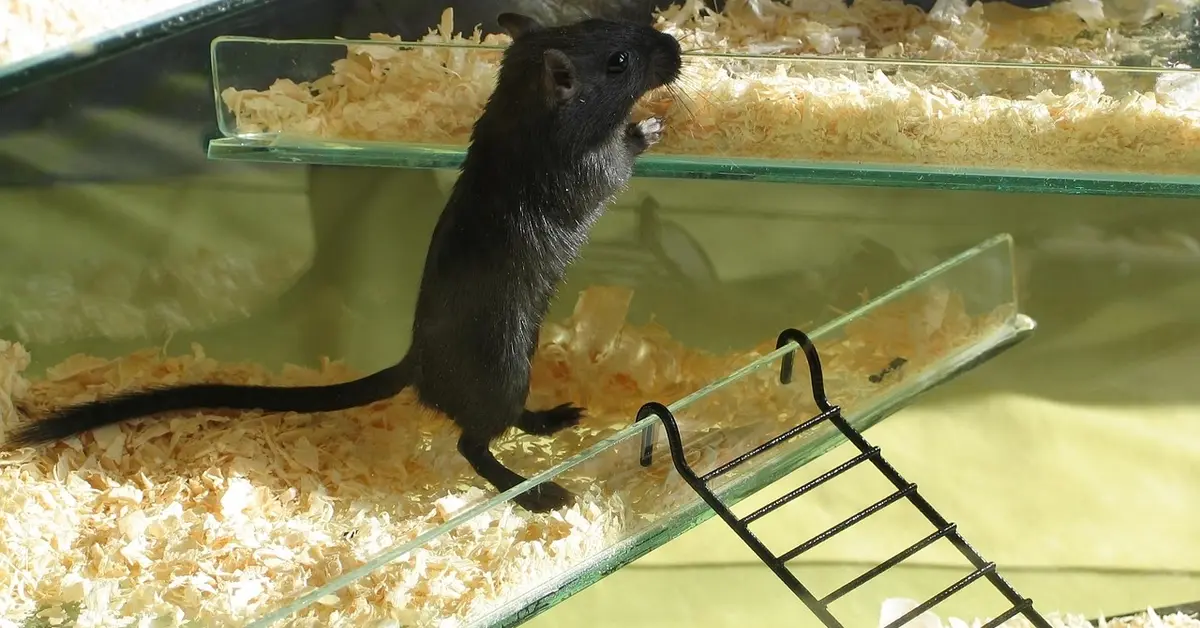
Wire cages are fantastic, but they come with a set of unique challenges that every owner should be prepared to manage. With a few clever adjustments, you can transform a problematic wire cage into a safe and stimulating palace for your pets.
How to Reduce Bar Chewing and Climbing Stress
Bar chewing is a frustrating and noisy behavior that usually signals boredom or stress. My mouse Kenny used to be a relentless bar chewer until I implemented these changes. This destructive behavior—excessive chewing—can wear down teeth and damage the cage, so it’s important to address it. Here’s what I changed to stop Kenny.
- Provide an Overload of Chew Toys: Offer a constant rotation of mouse-safe wood blocks, cardboard tubes, and seagrass toys. When they have a better option, the bars become less appealing.
- Increase Foraging Opportunities: Scatter their daily food ration throughout deep bedding instead of using a bowl. This encourages natural digging and searching behaviors that tire them out mentally.
- Create Visual Barriers: Attach cardboard or safe plastic panels to the lower half of the cage walls on the outside. This can make mice feel more secure and reduce the urge to climb to “escape.”
- Add More Solid Platforms: Incorporate plenty of shelves, ramps, and hammocks made of fabric or plastic. This gives their feet a break from the constant gripping of bars and reduces physical stress.
- Ensure Ample Out-of-Cage Time: A secure playpen or free-roaming session in a mouse-proofed area provides novel exploration that satisfies their adventurous nature far more than cage bars ever could.
Special Considerations for Different Mouse Groups
Not all mice have the same needs, and their housing should reflect their age, personality, and physical abilities. Tailoring your cage setup to your specific mice is the hallmark of truly thoughtful care. Especially when it involves catering to elderly or disabled mice.
For Baby and Juvenile Mice
- Bar spacing must be 1/4 inch or less. Young mice are incredible escape artists and can squeeze through shockingly small gaps.
- Include lots of low-level climbing structures to help them safely develop their coordination and strength.
For Senior Mice
- Minimize vertical climbing. Replace tall, barred walls with tanks or enclosures that have more horizontal space.
- Ensure all food, water, and nesting areas are easily accessible on a single level or connected by very gentle ramps.
- My older mouse, Gregory, much prefers a tank setup now where he can amble about without having to scale walls.
For Nervous or Skittish Mice
- A glass tank or a wire cage with solid wall panels can provide the feeling of security they crave.
- Fill the habitat with multiple, fully enclosed hideouts so they always have a safe place to retreat where they feel completely hidden.
- My Jeffery, who is quite anxious, spends most of his time in his coconut hide when he’s in a wire cage, but explores more bravely in his tank.
Frequently Asked Questions
How do I use a mouse cage size calculator?
A mouse cage size calculator helps determine the minimum floor space needed based on the number of mice. You typically input the number of mice, and it calculates the total area, often using a baseline of at least 100 square inches per mouse. However, these tools are a starting point; aim for more space to support natural behaviors like burrowing and exploring, as larger enclosures reduce stress and territorial issues.
What do people on Reddit recommend for mouse cage size?
On Reddit communities like r/PetMice, experienced owners often emphasize providing more than the minimum cage size to ensure mice thrive. Many suggest at least 200 square inches of floor space per mouse, with popular choices including large tanks or modified bins that allow for deep bedding and enrichment. This advice stems from collective observations that extra space reduces aggression and encourages active, natural behaviors.
What are typical mouse cage dimensions?
Typical wire cage dimensions for mice focus on floor space rather than height, with common sizes ranging from 24 inches long by 12 inches wide (288 square inches) for a pair, to larger setups like 30×15 inches for groups. Always pair these dimensions with appropriate bar spacing of 1/4 inch or less to prevent escapes, and prioritize a deep base for bedding to support digging and nesting activities.
Your Path to a Happy Mouse Home
The right wire cage is a secure palace that balances excellent ventilation with your mouse’s instinct to climb and explore. Prioritizing the correct bar spacing, typically no more than 1/4 inch, is the single most important factor for their physical safety. Use the cage’s vertical space by adding sturdy platforms, ramps, and climbing toys so mice can forage and exercise upward without crowding the floor. Make sure shelves and attachments are securely fixed and positioned to minimize the risk of falls.
Your thoughtful choice provides the foundation for a stimulating environment filled with toys, hammocks, and companionship. By selecting a well-designed habitat, you are directly investing in their well-being and setting the stage for years of joyful observation and interaction.
Further Reading & Sources
- Best Mouse Cage – Choosing the Right Home for Your Mice
- Proper bar spacing requirements for wire cages for mice and rats – Rodent Club – LiveJournal
- r/PetMice on Reddit: are there any wire cage brands that are suitable for mice?
Isabella is a passionate small pet enthusiast with over 8 years of experience in caring for mice. She loves sharing practical tips and heartfelt stories to help fellow mouse owners provide the best care for their tiny companions.
Cage Types