
The Secret Life of Whiskers: What They Really Do
Have you ever noticed your pet mouse gently brushing its whiskers against an object and wondered what secret messages those tiny hairs are sending? As a long-time mouse caretaker, I’ve observed how whiskers are far more than simple facial features-they are a primary navigation tool that keeps our small friends safe and aware.
This guide will walk you through the incredible ways vibrissae function, from detecting air currents to measuring spaces. You will learn exactly how whiskers provide a constant stream of sensory information, why they are vital for movement in the dark, and how proper care supports your mouse’s natural behaviors.
What Are Mouse Whiskers (Vibrissae)?
Think of your mouse’s whiskers as a sophisticated, built-in GPS and radar system, all rolled into one. These are not just ordinary hairs; they are highly specialized touch organs called vibrissae. Each whisker is rooted in a deep, fluid-filled follicle packed with an incredible number of nerve endings. This setup makes them exquisitely sensitive to the slightest touch, vibration, or change in air current.
You’ll notice they are arranged in neat, symmetrical rows on either side of their snout. The longest whiskers are typically on the sides, with smaller clusters above the eyes and on the cheeks. This specific arrangement provides a detailed, three-dimensional map of their immediate surroundings. In my time caring for mice like Kenny and Gregory, I’ve seen how they rely on this map far more than their vision, especially in the dim corners of their habitat.
How Do Whiskers Work as Sensory Tools?
Whiskers function by translating physical contact into electrical signals the brain can instantly understand. When a whisker brushes against an object, it bends. This bending motion presses on the nerve-packed follicle at its base. Your mouse’s brain receives this information with lightning speed, calculating the object’s precise location, size, and even texture. This allows them to navigate a complex environment without needing to see it clearly.
This system is so refined it helps them determine if a space is safe to enter. A quick whisker tap can tell them if a tunnel is wide enough for their body or if a surface is stable enough to climb. This constant stream of tactile data is fundamental to their confidence and spatial awareness. That tactile expertise helps explain why mice instinctively dig deep tunnels: they create secure, navigable refuges for nesting, temperature control, and predator avoidance. My more cautious mouse, Gregory, uses this to carefully assess a new hideout before committing to a full exploration.
The Whisking Behavior You’ll Notice in Your Mouse
You will often see your mouse rapidly moving its whiskers back and forth. This isn’t a random twitch; it’s a deliberate, controlled action called “whisking.” They are actively scanning their environment, much like we might run our hands along a wall in a dark room. The speed and pattern of their whisking can even tell you about their emotional state.
- Fast, wide sweeps: Indicates high curiosity or excitement, often seen during active exploration. My mouse Kenny does this when he’s first let out for playtime.
- Slow, methodical movements: Suggests careful investigation of a new object or a potentially risky situation.
- Whiskers pulled tightly back against the face: This is a sign of fear, stress, or submission. You might see this if they are startled.
- Asymmetrical movement: They might whisk more on one side to focus on a specific object of interest, like a tasty treat just out of view.
Watching this behavior is one of the true joys of mouse ownership. By paying attention to their whiskers, you gain a direct window into how your pet perceives its world. It’s a silent language of touch and sensation that guides their every move.
Why Whiskers Matter: Core Functions in Daily Mouse Life

Spatial Navigation and Obstacle Avoidance
Your mouse’s whiskers are their primary navigation tool, constantly mapping the world in fine detail. They act as high-resolution sensors, measuring the width of tunnels and the gaps between cage furniture before the rest of the body commits to movement. This constant, subtle feedback allows them to judge whether a space is passable, preventing them from getting stuck in tight spots. I’ve watched my mouse, Kenny, use his whiskers to perfectly judge a leap between two platforms, his nose twitching as he calculated the distance.
They don’t just sense static objects; they detect minute vibrations traveling through surfaces, which helps them understand the stability of a branch or the solidity of a wall. A mouse moving through a complex environment is essentially “seeing” it through their face, using their senses of smell, sound, and touch.
Nocturnal Sensing and Movement in Darkness
Since mice are most active during dawn and dusk, their vision in low light is limited. Whiskers compensate for this beautifully, creating a dynamic 3D map of their surroundings that doesn’t rely on light. In complete darkness, a mouse’s whiskers become its eyes, painting a picture of the world through touch and vibration. This is why you’ll rarely see a pet mouse bump into things, even when you’ve turned the lights off for the night.
Their movements change in the dark, with more pronounced whisking-the rapid, back-and-forth motion-to gather as much information as possible from the empty space around them.
Object Detection and Texture Discrimination
Whiskers are exquisitely sensitive to texture and material. The follicles at their base are packed with nerves that can distinguish between the smooth surface of a ceramic food dish and the rough grain of a wooden chew toy. This tactile discrimination helps mice identify food, safe nesting materials, and even potential threats based on surface feel alone.
You might see your mouse gently brush its whiskers against a new object you’ve placed in the cage; it’s carefully “reading” the item to decide if it’s interesting, edible, or dangerous. This behavior is especially important when you’re taming your mouse for shows, as it helps them get accustomed to new environments and stimuli.
Airflow Detection and Predator Awareness
Whiskers are incredibly sensitive to the slightest changes in air currents. A sudden draft from an opening door or the displacement of air from your hand reaching into the cage sends immediate signals. This ability to “feel” the air helps them detect approaching predators or large objects, triggering a lightning-fast flight response. It’s a primal survival mechanism that remains highly active in our domesticated friends.
My mouse Jeffery, who is naturally more anxious, is particularly attuned to these air shifts, often freezing and twitching his nose at the slightest breeze I can’t even feel.
Balance, Orientation, and Proprioception
Whiskers contribute significantly to a mouse’s sense of balance and body position, a sense known as proprioception. When a mouse is climbing, the whiskers on its cheeks and above its eyes help it maintain head posture and stability. By providing constant feedback about the position of the head relative to the body and the environment, whiskers are a critical component of their impressive agility.
This is why you see them make such precise, acrobatic moves on cage bars and ropes; their whiskers are telling them exactly how they are oriented in space.
Social Communication Between Mice
While not as pronounced as in some animals, whiskers play a role in mouse social dynamics. During friendly encounters, mice will often engage in mutual whisker touching, a gentle form of greeting and recognition. The position and movement of whiskers can signal intent, from relaxed and forward during exploration to pulled tightly back against the face during a conflict or moment of fear. Observing these subtle cues can help you understand the social hierarchy and mood within your mouse group. These signals are especially useful in a mouse social behavior guide when assessing solitary versus group housing needs. Solitary mice often show fewer mutual whisker touches and more defensive whisker positions, while social animals use whisker contact to build relationships.
Comparing Whisker Functions Across Animals
Rats, Rabbits, and Other Small Mammals
Many small mammals share this reliance on vibrissae, but with specializations.
- Rats: Function very similarly to mice, using their long whiskers for navigation and texture discrimination. They are known for a behavior called “whisking,” where they move their whiskers rhythmically to actively gather information.
- Rabbits: Their whiskers are crucial for navigating their warrens in the wild. They are especially sensitive around the mouth and nose to help discriminate between different types of vegetation while foraging.
- Hamsters and Gerbils: As burrowing animals, their whiskers are vital for navigating dark, narrow tunnels underground and judging the integrity of their burrow walls.
Cats, Dogs, and Larger Animals
In larger animals, the function of whiskers shifts slightly but remains vital.
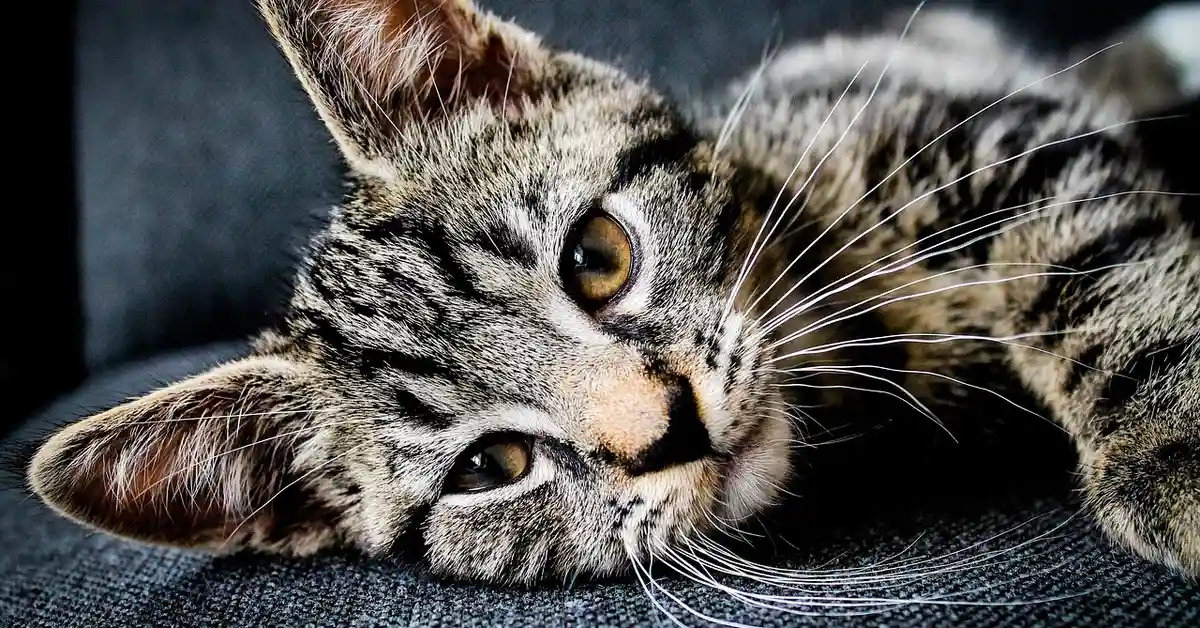
- Cats: A cat’s whiskers are primarily used to determine if a space is wide enough for their body to fit through. They are also used in hunting to detect the slightest movement of prey in close quarters and to protect their eyes by triggering a blink reflex when touched.
- Dogs: Whiskers, especially those around the muzzle (mystacial whiskers), help dogs sense nearby objects, particularly in low light. They can also detect subtle changes in airflow, which can help them track scents.
- Seals and Sea Lions: These animals have the most sensitive whiskers of any mammal, using them to track the hydrodynamic trails left by fish in the water, effectively “seeing” with their whiskers while hunting.
Specialized Cases: Carpal and Aquatic Whiskers
Some animals have whiskers in surprising places that serve highly specialized roles.
- Carpal Whiskers: Found on the wrists of some animals like cats and squirrels, these whiskers provide information about the position of the forelimbs and what the animal is holding or climbing on.
- Aquatic Whiskers: As mentioned with seals, whiskers are a key sensory tool in water where vision and smell are less reliable. Manatees also use bristle-like whiskers all over their bodies to help them navigate and find food in murky waters.
This diversity shows that while the fundamental purpose of whiskers is tactile sensing, their exact application is beautifully adapted to each animal’s lifestyle and environment.
Reading Your Mouse’s Whiskers: Health and Behavior Signals
Normal Whisker Positions and Movements
A happy, healthy, and curious mouse will have active, forward-facing whiskers. You’ll see them constantly moving, sweeping back and forth as the mouse explores.
- Active Exploration: Whiskers are fanned out wide and moving rapidly (whisking).
- Relaxed Resting: Whiskers are held loosely to the sides of the face with little to no movement.
- Eating or Investigating: Whiskers are pointed forward, intently focused on the object of interest.
Observing this normal, fluid movement is a sign of a content and engaged pet. My older mouse, Gregory, has slower, more deliberate whisker movements that perfectly match his calm personality.
Whisker Signals That Indicate Stress or Discomfort
Changes in whisker position and movement are direct windows into your mouse’s emotional state.
- Whiskers Pulled Back Tightly: This is a classic sign of fear, submission, or pain. The mouse is trying to make itself smaller and protect its sensitive facial sensors.
- Asymmetrical Whisker Movement: If one side of the whiskers is moving normally while the other is still, it could indicate discomfort, a minor injury on that side, or a neurological issue.
- Constant, Frantic Whisking in a Huddled Position: This often signals high anxiety or that the mouse feels trapped and threatened.
Whisker Conditions That Need Your Attention
While whiskers naturally shed and regrow, certain conditions warrant a closer look.
- Broken or Chewed Whiskers: This can be a sign of barbering, a behavior where a dominant mouse chews the whiskers of a cagemate, or it could result from the mouse itself chewing them due to stress or boredom.
- Whiskers Falling Out in Clumps: Sudden, significant whisker loss can point to nutritional deficiencies, skin conditions like mites, or systemic illness.
- Constantly Asymmetrical or Motionless Whiskers: A persistent lack of movement on one side can indicate nerve damage or a localized infection that requires veterinary diagnosis.
Never, under any circumstances, trim your mouse’s whiskers. It is the equivalent of blindfolding them and severely disorients them, causing significant stress and impairing their ability to navigate their world safely.
Protecting Your Mouse’s Whiskers: Practical Care Tips
Never Trim or Cut Whiskers
Your mouse’s whiskers are not like human hair; they are deeply rooted sensory organs connected to a rich network of nerves. Cutting them is not a grooming task but an act that temporarily blinds and disorients your pet. A mouse with trimmed whiskers will struggle to navigate, becoming stressed and more prone to bumping into objects. I’ve seen this confusion firsthand, and it’s a heartbreaking sight to see such an agile creature suddenly become clumsy and hesitant. It’s important to know when to be concerned about your mouse’s grooming habits.
Choosing Whisker-Friendly Housing
Think of your mouse’s whiskers as constantly active measuring tapes. A cage crammed with narrow tubes and tight spaces forces these sensitive hairs to be pressed against surfaces constantly. Opt for a spacious enclosure with a variety of wide tunnels and open platforms to allow for free whisker movement. I prioritize cages with a large, open floor plan, which gives my mice, like the adventurous Kenny, the room they need to sweep their whiskers without constraint. This is a key point in our Ultimate Guide to Mouse Cages. The guide outlines ideal dimensions and layouts to keep whiskers—and mice—comfortable.
Preventing Whisker Fatigue in Feeding Areas
Whisker fatigue is a real, though often overlooked, condition caused by the constant stimulation of whiskers against the sides of a deep, narrow food dish. Swap out deep bowls for shallow dishes or even flat ceramic tiles to serve food, allowing your mouse to eat comfortably without its whiskers touching the sides. My more cautious mouse, Gregory, visibly relaxes when he can access his food without his face brushing against a bowl’s rim.
- Use shallow jar lids or sauce dishes.
- Place food directly on a clean, flat surface within the cage.
- Scatter feeding encourages natural foraging without dish contact at all.
Safe Handling Techniques
How you pick up your mouse can directly impact its delicate facial sensors. Grabbing from above can feel like a predator attack and may bend or damage whiskers. The safest method is to scoop your mouse gently from below, supporting its entire body and allowing its head and whiskers to remain free and forward-facing. Let them walk onto your hand voluntarily; this builds trust and keeps their primary navigation system completely undisturbed.
Enrichment That Respects Whisker Function
Good enrichment challenges a mouse’s mind and body while working with its natural anatomy. Create an environment filled with varied textures—cardboard, untreated wood, smooth stones—that your mouse can explore with its whiskers to gather information safely. I avoid hard plastic mazes with sharp corners, favoring instead paper towel tubes and woven grass balls that provide interesting tactile feedback without risk of snapping a precious vibrissa. The best enrichment toys stimulate a mouse’s curiosity and problem-solving—puzzle feeders, foraging balls, and small hide boxes are especially effective. Rotate items regularly to keep challenges novel and engaging.
Troubleshooting Common Whisker Problems
Whisker Barbering Between Cagemates
If you notice your mice have shortened, chewed-looking whiskers, you might be witnessing whisker barbering. This behavior is often a sign of social stress or dominance within a group, not simple grooming. Barbering—when a dominant mouse chews the fur or whiskers of cage-mates—explains why you may see bald patches or shortened whiskers. Identifying barbering lets you address dominance and enrichment issues to prevent further chewing. It can also stem from boredom. I once had to carefully monitor my group’s dynamics and increase their enrichment after noticing Jeffery’s normally fine whiskers were being nibbled.
- Ensure the cage is large enough to prevent competition for space.
- Provide multiple copies of key resources like food bowls, water bottles, and hiding spots.
- Introduce new, engaging toys to redirect this behavior.
Damaged or Broken Whiskers from Environment
A single broken whisker is usually not a cause for alarm and will shed and regrow naturally. Consistently broken or bent whiskers, however, point to a problem in the habitat, such as wire mesh wheels, sharp cage decorations, or gaps in furniture they frequently squeeze through. Regularly inspect your setup for any rough or sharp edges that could be snagging and damaging these vital tools.
Whisker Loss from Health Issues
While whiskers do naturally shed and regrow, sudden, significant whisker loss can be a red flag. Patchy loss on the face and body often indicates a skin issue, such as mites or a fungal infection, which requires a veterinarian’s diagnosis and treatment. Nutritional deficiencies can also lead to poor coat and whisker health, so providing a high-quality, varied diet is a key part of prevention.
Supporting a Mouse with Compromised Whiskers
A mouse that has lost many whiskers needs your help to navigate its world confidently. Keep the cage layout consistent and predictable, avoiding frequent major rearrangements that force a visually-impaired mouse to re-learn its entire territory. Place food, water, and nesting material in easily predictable locations. You can even use scent markers—a drop of vanilla extract on a hideout—to help them identify key areas while their whiskers regenerate.
Frequently Asked Questions
What is the function of whiskers in lions?
In lions, whiskers serve as critical tools for navigation and hunting in their natural habitats. They help detect obstacles and subtle changes in their environment, especially during low-light conditions like dawn or dusk when they are most active. Additionally, the length and positioning of their whiskers can aid in sensing the movement of prey and maintaining spatial awareness during stalking or climbing.
What is the function of whiskers in catfish?
Catfish use their whisker-like barbels primarily for locating food in murky or dark waters where vision is limited. These barbels are covered in taste buds and sensory cells, allowing them to detect chemicals and textures to identify edible items. This helps them forage effectively along riverbeds or lakes, making whiskers essential for survival in their aquatic environment.
What is the function of carpal whiskers?
Carpal whiskers, found on the wrists of animals like cats and squirrels, provide sensory feedback about the position and movement of the forelimbs. They help in judging the stability and texture of surfaces during climbing or when handling objects, enhancing coordination and balance. This specialized function supports agile behaviors, such as grasping prey or navigating complex terrain.
Final Thoughts
Your mouse’s whiskers are not just decorative features; they are a fundamental part of how your pet perceives and safely navigates its world. These sensitive tools allow them to judge distances, sense air currents, and explore their surroundings with confidence, especially in the dark.
By respecting these delicate vibrissae and understanding their purpose, you are actively contributing to your mouse’s well-being and happiness. The next time you see your mouse twitching its nose and whiskers, you’ll know it’s reading its environment, a beautiful reminder of the incredible creature in your care.
Further Reading & Sources
- Whiskers – Wikipedia
- r/askscience on Reddit: What are a cat’s whiskers for and how do they work?
- Why Do Cats Have Whiskers? | VCA Animal Hospitals
Isabella is a passionate small pet enthusiast with over 8 years of experience in caring for mice. She loves sharing practical tips and heartfelt stories to help fellow mouse owners provide the best care for their tiny companions.
Mouse Biology & Anatomy