
The Genetics of Mouse Markings: Dutch, Banded, Broken, and Variegated
Have you ever gazed at your mouse’s beautiful coat and wondered how those distinct patterns came to be, or why some markings appear while others don’t? As a fellow mouse enthusiast who has spent years observing and caring for my own pets, I know that curiosity well-it’s what drove me to learn more about the fascinating world of mouse genetics.
This guide will walk you through the genetic principles behind these markings in a clear, accessible way, so you can better appreciate your pet’s unique appearance. We will explore the inheritance patterns of Dutch, Banded, Broken, and Variegated markings, explain how specific genes influence coat design, and provide insights into what these traits can tell you about your mouse’s background.
How Mouse Coat Pattern Genetics Actually Work
Think of your mouse’s DNA as a master artist’s paint palette. The genes responsible for markings act like specific brushes, each one programmed to deposit color in a very particular way and in a very specific location on the canvas of your mouse’s body. A Dutch gene is a different brush from a Banded gene, and they create entirely distinct works of art.
Most of these beautiful patterns are controlled by what we call recessive genes. This means a mouse needs to inherit the specific marking gene from both its parents to visually show that pattern. A mouse can carry the gene secretly, passing it to its babies without having the marking itself. This is why you can sometimes be surprised by the patterns in a litter! By contrast, dominant genes only need to come from one parent to be visible and can mask recessive markings. Knowing which traits are dominant or recessive helps explain and predict the variety of mouse coat colors you encounter.
- The Spotting Locus: This is the primary genetic address for many of the patterns we adore. Different versions (alleles) at this spot determine if a mouse will be a solid color, have a belly spot, or display a full Dutch pattern.
- Modifier Genes: These are the background artists. They don’t create the main pattern, but they influence its sharpness, size, and color intensity. They explain why two Dutch-patterned mice from the same litter can have slightly different looking “saddles.”
- The Base Coat Matters: The pattern genes work on top of the mouse’s base coat color. A Dutch pattern on a black mouse will look stark and dramatic, while the same pattern on a champagne mouse will be soft and subtle.
Dutch Pattern: The Classic Saddle Marking
This is the quintessential fancy mouse pattern, the one that often comes to mind first. A proper Dutch mouse looks like it’s wearing crisp white trousers and a perfectly fitted colored saddle. It’s a striking, balanced look that has been prized by mouse enthusiasts for generations. In my own mischief, my mouse Gregory, with his calm demeanor, seems to carry the dignified air this pattern often embodies.
The Genetics Behind Dutch Markings
The Dutch pattern is caused by a specific recessive allele at the spotting locus, often notated as s^d. For a mouse to be a true Dutch, it must have two copies of this gene (s^d/s^d). If it only has one copy, it might just show a small white belly spot or no white at all, all while carrying the potential to produce Dutch babies. This is in contrast to other marked or irregular patterns, which do not have the same genetic basis.
The magic of this gene is how it restricts pigment. It creates a very specific “ceiling” on the body where color stops and white begins. The ideal is a clean, straight line running across the belly and up the sides, leaving the front half of the body white and the back half colored. The gene is a precise instructor, telling pigment cells exactly where they are and are not allowed to settle during the mouse’s development. It’s one of several pattern genes that determine markings on a mouse.
Evaluating Dutch Pattern Quality
When you’re looking at a Dutch mouse, whether choosing one or just admiring, there are key points that define a high-quality pattern. Breeders and fanciers look for a clean, symmetrical presentation. Understanding show standards helps turn that ideal into a winning mouse. Knowing what judges value lets breeders focus breeding and presentation to meet those expectations.
- The Saddle: The colored portion on the back should be continuous and unbroken. It should start behind the shoulders and extend to the base of the tail.
- The White Blaze: The face should have an inverted “V” of white that is as even and sharp as possible. A messy or off-center blaze is a common fault.
- The Line of Demarcation: This is the line separating the color from the white on the body. The most prized Dutch mice have a clean, sharp, and nearly horizontal line running across their sides and belly. A wavy or blurry line is considered less ideal.
- The Legs and Paws: All four feet should be completely white, like they’ve been dipped in paint.
It’s rare to find a mouse with absolute perfection in all these areas. Much of the charm lies in the slight variations that make each Dutch-marked mouse a unique individual. My advice is to appreciate the artistry of the pattern itself, knowing that genetics can be an unpredictable artist. A visual guide to mouse color genetics can help you see how those charming variations arise. It translates genetic possibilities into the visual patterns you can expect.
Banded Pattern: The White Belt Around the Middle
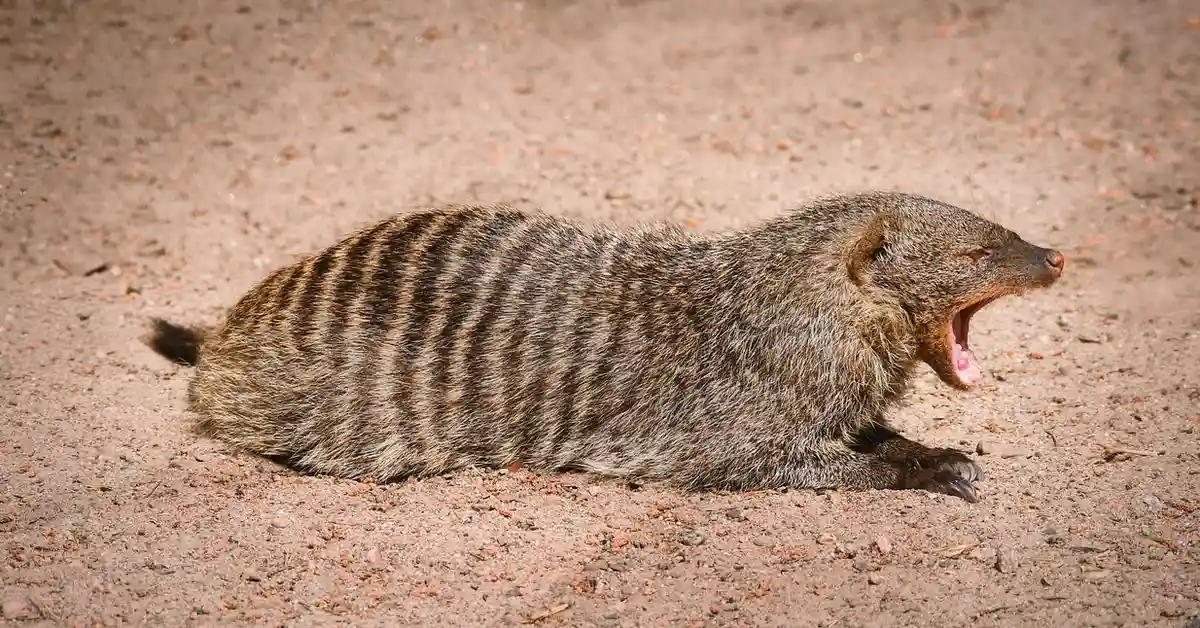
Banded mice feature a crisp white stripe encircling their midsection, creating a striking belt-like effect against their base coat color. This pattern adds a touch of elegance and is one of the most recognizable markings in fancy mice. The band should ideally be unbroken and evenly positioned, though slight variations can occur, giving each mouse a unique charm.
How Banded Markings Are Inherited
Banded markings are typically controlled by a dominant gene, meaning only one copy is needed for the trait to appear. If you breed a banded mouse with a non-banded one, about half of the offspring will likely show the banded pattern. This inheritance is straightforward, but other genes can influence the band’s width and clarity. For instance, my mouse Kenny has a light gray band that stands out vividly due to his base color, showing how background hues play a role.
- Dominant gene inheritance: One parent with the gene can pass it on.
- Consistency: Bands may vary in thickness based on genetic modifiers.
- Breeding outcomes: Pairing banded mice can produce solid-colored offspring if both carry recessive genes.
Broken Pattern: Scattered White Spots
Broken patterns showcase random white patches scattered across the body, creating a playful, confetti-like appearance. These spots can range from tiny flecks to larger splotches, making each mouse’s coat a one-of-a-kind masterpiece. The distribution is often asymmetrical, adding to the whimsical feel that many owners adore.
The Genetics Creating Broken Coats
Broken coats result from piebald or spotting genes that interfere with pigment cell migration during development. This genetic mix leads to areas where color is absent, forming those distinctive white spots. The expression can be influenced by multiple genes, so predicting the exact pattern in offspring involves some unpredictability. These white patches overlay whatever base coat the animal carries, including agouti patterns. The agouti gene controls banding on individual hairs, determining the base color visible where pigment is present. In my experience, mice like Jeffery, with his cheerful white patches, demonstrate how these genes interact in delightful ways.
- Polygenic traits: Multiple genes contribute to spot size and placement.
- Variable expression: Spots may appear more densely on certain body parts.
- Inheritance patterns: Often recessive, requiring both parents to carry the gene for full expression.
Variegated Pattern: Mixed and Mottled Markings
Variegated mice display a blended, mottled coat where colors intermingle in a soft, marbled effect. This pattern gives a weathered, artistic look that can change subtly as the mouse ages. Unlike solid or banded coats, variegation involves a mix of pigmented and non-pigmented hairs, creating depth and texture.
Understanding Variegation Genetics
Variegation is often linked to genes that cause a gradual loss of pigment in hair follicles over time. This results in a coat that appears speckled or faded, with colors blending seamlessly into one another. The underlying genetics can involve modifiers that affect how quickly or extensively the variegation develops, making it a dynamic trait to observe.
- Age-related changes: Variegation may become more pronounced as mice mature.
- Genetic modifiers: Influence the intensity and spread of mottling.
- Common in older mice: Like my calm Gregory, whose dark brown coat has softened with subtle variegation.
Variegation Extremes: Maximum and Minimum Expression
At the maximum end, variegation can cover most of the coat with light, diffuse markings, while minimum expression might show only faint speckles. Extremes in variegation highlight how genetic and environmental factors shape each mouse’s unique appearance. For example, mice with high variegation might appear almost frosty, whereas those with low levels retain more of their base color.
- Maximum variegation: Widespread mottling that lightens the overall coat.
- Minimum variegation: Slight, scattered marks that add subtle contrast.
- Factors affecting expression: Diet, health, and lineage can all play a role.
Comparing the Four Main Marking Types
Getting to know the different coat patterns is like learning a new visual language for your mice. Each marking type follows a distinct genetic blueprint that creates a unique and beautiful result. Here’s a side-by-side look at how these patterns typically present themselves.
Visual Guide to Markings
| Marking Type | Classic Description | Key Identifying Feature |
|---|---|---|
| Dutch | A clean, white “saddle” on the back with a colored head and rear. | The sharp, distinct line separating the white and colored sections. |
| Banded | A solid white band encircling the mouse’s midsection. | A continuous belt of white fur, like a neat stripe. |
| Broken | A mix of colored and white patches in an irregular pattern. | The unpredictable, patchy distribution of color. |
| Variegated | Colored fur interspersed with white-tipped or white-based hairs. | A “peppered” or “frosted” look rather than solid patches. |
Dutch markings are often the most sought-after for their crisp, almost painted-on appearance. The ideal Dutch pattern is symmetrical, creating a perfect balance of color and white. In my own mischief, my mouse Gregory has a near-perfect Dutch pattern that makes him look very distinguished.
Banded mice can sometimes be confused with poorly marked Dutch, but the key difference is the band. While Dutch has a white wedge on the belly, a Banded mouse has a true, unbroken ring of white. It’s a simpler, yet equally charming, genetic expression. Solid-colored mice, by contrast, lack any white markings and display a uniform coat. That clear difference makes the band on a Banded mouse immediately obvious.
Broken markings are the creative free-thinkers of the mouse world. No two Broken mice are exactly alike, making each one a unique work of art. The amount of white can vary dramatically, from a small splash on the forehead to a mostly white coat with just a few colored spots. To learn more about the different colors and markings in mice, check out our pet mouse colors and markings guide.
Variegated is the subtlest of the four. Instead of clear patches, the white hairs are mingled within the colored coat, giving a shimmering, textured effect. This pattern can be easy to miss on a quick glance but is stunning up close.
What Affects Your Mouse’s Final Marking Pattern

Even with a strong genetic predisposition, the final pattern you see on your mouse isn’t always set in stone from birth. A complex interplay of genetics and developmental factors works together to create the masterpiece you see. It’s not just a single gene calling all the shots.
The Genetic Recipe
The base pattern is determined by a set of specific genes. Think of it like a recipe:
- The “Dutch” gene provides the instructions for where the white should start and stop.
- The “Belted” or “Banded” gene dictates the ring-like white band.
- A “Piebald” or “Spotting” gene is responsible for the random patches in Broken mice.
- Modifier genes influence the amount of white and the sharpness of the edges.
These genes can interact with each other in unexpected ways, sometimes suppressing or enhancing another gene’s effect. A mouse might carry the genes for a Dutch pattern, but if a modifier gene for heavy white spotting is also present, it could result in a Broken pattern instead.
Beyond DNA: Other Influencing Factors
Genetics provides the blueprint, but the construction can be influenced by other elements.
- In-Utero Development: The migration of pigment cells in the embryo can be slightly different each time, leading to small variations even between siblings with identical genetics.
- Temperature: In some other rodent species, temperature can affect color expression, though this is less pronounced in fancy mice.
- Overall Health and Nutrition: A mouse that is poorly nourished or stressed during its early growth may not develop its coat to its full genetic potential. A glossy, healthy coat shows markings at their best.
I’ve noticed that my youngest, Jeffery, who was the smallest of his litter, has a slightly less distinct pattern than his brothers, which might hint at those developmental factors at play. Caring for a pregnant doe with excellent nutrition is one of the best things you can do to help her babies express their full genetic potential for beautiful markings.
Frequently Asked Questions
What is a Dutch markings genetics chart?
A Dutch markings genetics chart is a visual guide that illustrates how the Dutch pattern is inherited in mice, typically using diagrams like Punnett squares. It helps breeders predict the likelihood of offspring displaying Dutch markings based on parental genotypes, such as crosses between carriers or full Dutch mice. This tool simplifies understanding recessive inheritance, allowing for informed breeding decisions without guesswork.
How do Dutch markings genetics work in mice?
Dutch markings in mice are controlled by a recessive gene at the spotting locus, requiring two copies for the pattern to appear. This gene directs pigment cells to settle only on the rear half of the body, creating the classic saddle effect, while modifier genes can influence the sharpness and symmetry of the white and colored areas. Since it’s recessive, mice with just one copy may not show the pattern but can pass it to their young.
Can Dutch markings be reliably predicted in breeding?
While Dutch markings follow recessive genetics, predicting exact patterns can be tricky due to influences from modifier genes and developmental factors. Breeding two Dutch-marked mice will always produce Dutch offspring, but crosses involving carriers may yield varied results, with some pups showing only partial white or belly spots. Consistent outcomes often require selective breeding over generations to stabilize the desired traits.
Your Path Forward
Exploring the genetics behind your mouse’s coat is a journey into a beautiful, living art form. Each unique marking—from the crisp saddle of a Dutch to the scattered patches of a Variegated—tells a story written in their DNA. To understand these patterns, it helps to learn the basics of mouse color genetics — especially the b, c, d and p loci, which influence base pigment, pigment production, dilution and patterning. Allele interactions at these loci often explain why offspring can look so different from their parents.
Let this knowledge deepen your appreciation for your pet’s one-of-a-kind appearance. Ultimately, understanding these patterns isn’t about predicting the future, but about celebrating the wonderful individuality of the mouse sharing your home right now.
Further Reading & Sources
- Mouse coat color mutations: From fancy mice to functional genomics – Steingrímsson – 2006 – Developmental Dynamics – Wiley Online Library
- Mouse Genetics
- MGI – The Coat Colors of Mice by Willys K. Silvers
Isabella is a passionate small pet enthusiast with over 8 years of experience in caring for mice. She loves sharing practical tips and heartfelt stories to help fellow mouse owners provide the best care for their tiny companions.
Mice Genetics