
What Maze Tests Reveal About Learning, Memory, and the Brain
Have you ever watched a mouse skillfully navigate a maze and wondered how its brain masters such complex tasks? This article breaks down the science behind maze experiments, offering you a clear and engaging look at how these tests shed light on our own cognitive processes.
We will explore the basics of maze testing, how they measure learning and memory, and the specific brain regions involved in these fascinating behaviors.
Why Maze Tests Matter for Pet Mouse Owners
Observing your mouse navigate a simple cardboard maze isn’t just a cute trick; it’s a window into their cognitive health and overall happiness. This activity directly engages their natural problem-solving instincts, providing a form of enrichment far superior to a static environment. I’ve seen my own mouse, Kenny, transform from a restless explorer to a focused problem-solver during our maze sessions, which visibly satisfies his curious nature.
Beyond mental stimulation, these tests serve as a subtle health check. A mouse that suddenly struggles with a previously mastered route might be experiencing stress, vision issues, or other underlying health problems. Regular, gentle maze testing helps you establish a cognitive baseline for your pet, allowing you to notice subtle changes that might otherwise go unseen.
- Prevents boredom and associated behaviors like barbering or excessive chewing.
- Strengthens the bond between you and your mouse through positive, interactive play.
- Offers a safe way to satisfy their innate need to explore and map their territory.
How Mice Learn and Remember in Their Daily Lives
Your mouse is constantly creating a mental map of their world. Every time you rearrange their cage or introduce a new toy, they are learning and remembering the new layout. This spatial learning is a fundamental part of how they interact with their environment, ensuring they know where to find food, water, and safe hiding spots. Providing toys encourages exploratory play that reinforces those mental maps. Play taps into their natural psychology, promoting problem‑solving, curiosity, and social interaction.
They rely on a combination of senses to build this memory. Whiskers help them feel their way in the dark, while their keen sense of smell leaves and follows scent trails. Watching my mice, I notice Gregory often pauses to sniff a corner before proceeding, reinforcing his mental map with olfactory cues. This multi-sensory approach is key to their success.
The Brain Structures Behind Mouse Memory
The incredible navigational skills of mice are powered by specific regions in their brains. The most critical is the hippocampus, a seahorse-shaped structure vital for forming and storing spatial memories.
- Hippocampus: Acts as the brain’s internal GPS, creating a cognitive map of their surroundings.
- Prefrontal Cortex: Helps with decision-making, allowing them to choose the best path.
- Striatum: Involved in forming habits, so a frequently run maze route becomes automatic.
Think of the hippocampus as a cartographer drawing a map, while the prefrontal cortex is the navigator deciding which roads to take. When your mouse successfully finds the treat in a maze, it’s a sign these brain regions are communicating effectively.
Working Memory vs. Long-Term Memory in Mice
Mice use different types of memory, just like we do. Understanding this distinction helps you appreciate their daily behaviors and learning pace.
Working memory is their “mental scratchpad,” holding information for immediate use. This is what Kenny uses when he sees me place a sunflower seed in a maze-he remembers its location long enough to dart over and retrieve it. It’s fleeting and task-specific.
Long-term memory is their internal library of experiences and learned skills. This is what Gregory relies on. He remembers the stable layout of his cage, the sound of the treat bag, and the general rules of the maze game from our past sessions. This type of memory is more stable and can last a lifetime.
- Working Memory is for: Recalling a hidden treat’s location, navigating a new section of a play area.
- Long-Term Memory is for: Recognizing you as their caregiver, knowing their favorite sleeping spot, remembering a complex maze route over several days.
The transition from working to long-term memory is why patience and repetition are so vital when introducing new challenges to your mice. Jeffery, for instance, often needs a few gentle repetitions to commit a new path to his long-term memory, but once he does, his confidence grows noticeably.
The Major Maze Tests Used in Mouse Research
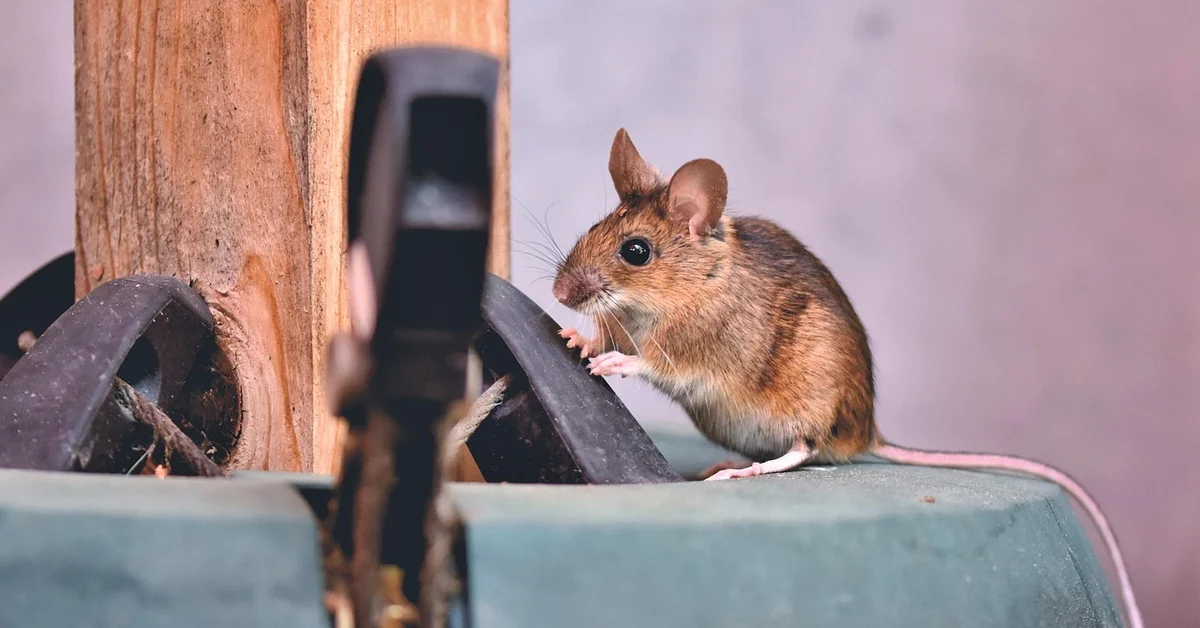
T-Maze: Testing Simple Choices and Reward Learning
Think of the T-Maze as a simple fork in the road for a mouse, presenting a straightforward left-or-right decision. Researchers use this design to see how quickly a mouse learns that one specific arm of the maze always contains a delicious reward, like a tiny piece of walnut or a sunflower seed. It’s a pure test of associative learning-connecting a location with a positive outcome. In my own experience, my mouse Kenny would master these choices with lightning speed, his impulsive nature driving him toward the promised treat. This test reveals the fundamental building blocks of how our pets learn from their daily experiences, like remembering which corner of their cage you usually drop the veggie scraps into.
Radial Arm Maze: Measuring Working Memory Capacity
Picture a wagon wheel with several pathways, or arms, extending from a central hub. The Radial Arm Maze is a sophisticated puzzle that challenges a mouse’s short-term, or “working,” memory. Food is placed at the end of only some arms, and the smartest strategy is for the mouse to remember which arms it has already visited to avoid wasting energy on empty ones. It’s like your mouse creating a mental grocery list and checking off items. Watching my mice, I see Gregory’s patient, methodical nature shine here; he doesn’t rush, carefully recalling his path. This maze demonstrates that mice aren’t just wandering aimlessly-they are actively forming and using complex mental lists of their surroundings.
Morris Water Maze: Understanding Spatial Memory and Navigation
This test involves a small pool of opaque water where a hidden platform offers the only dry refuge. The Morris Water Maze is the gold standard for studying spatial memory, forcing a mouse to rely entirely on distant visual cues around the room to locate the platform. It’s not about smell or luck; it’s about building a cognitive map. While we’d never subject our pets to this, the principle translates directly to how they learn the layout of their playpen or recognize the location of their favorite hammock from across the cage. A mouse’s ability to do this is a powerful sign of a healthy, active brain creating a detailed internal GPS.
Y-Maze: Quick Assessment of Exploration and Memory
The Y-Maze is a simpler, three-armed cousin to more complex tests, often used to get a rapid read on a mouse’s natural curiosity and short-term memory. The most common test is spontaneous alternation, where a healthy, curious mouse will typically explore a new arm of the maze rather than returning to one it just visited. My little Jeffery, with his observant and slightly anxious personality, exemplifies this-he cautiously investigates new spaces, driven by a need to understand his environment. A decrease in this behavior can be one of the first subtle signs that something might be affecting a mouse’s cognitive well-being, making it a valuable, non-stressful indicator for researchers.
What Maze Research Reveals About Mouse Cognition
How Mice Build Mental Maps of Their Environment
Mice are natural cartographers, constantly sketching detailed mental maps of their territory. They don’t just memorize a sequence of turns; they construct a rich, integrated picture of their world using stable landmarks like a large piece of furniture, a specific scent, or even the room’s light source. In your home, this is why a mouse can expertly navigate from its nest to its food dish and back, even in semi-darkness. They use a cognitive process called spatial learning, which involves creating and continuously updating a neural representation of space. This incredible skill ensures they can find resources and avoid danger with impressive efficiency. As they explore, unpleasant encounters—like being caught in a trap—get incorporated into those maps. Over time they remember and avoid those locations, which is why mice can become surprisingly adept at evading traps.
- Landmark Use: They fixate on large, unmoving objects to orient themselves.
- Path Integration: They unconsciously track their own movements and distance traveled.
- Contextual Memory: They tie specific memories to entire environments, not just single objects.
Learning Strategies Mice Use to Solve Problems
Just like people, different mice have different learning styles, and maze studies have beautifully highlighted this variety. Some mice are “place learners” who excel at building cognitive maps, while others are “response learners” who rely on memorized body turns, like always going left at a specific spot. I see this play out with my own trio: Kenny the adventurer is a classic place learner, boldly orienting himself by the room’s layout, while Jeffrey often uses a response strategy, cautiously repeating a sequence of movements that worked before. This shows their problem-solving is flexible and adaptive, not just a single, hardwired behavior. Knowing which style a mouse favors is useful when following a step-by-step target training guide: place learners often respond better to visual landmarks, while response learners prefer consistent spatial cues and repetitive shaping. Tailoring your steps, cues, and rewards to each mouse’s style will make target training quicker and more reliable.
- Trial and Error: Initial attempts are often random, testing every option.
- Strategy Refinement: They quickly discard actions that don’t lead to rewards.
- Habit Formation: Successful sequences become ingrained, almost automatic behaviors.
Factors That Affect Mouse Memory Performance
A mouse’s ability to learn and remember is not set in stone; it’s a delicate process influenced by a whole host of factors. Stress is a major memory disruptor, as a frightened or anxious mouse will struggle to form new memories, which is why a calm, predictable home environment is so vital for their cognitive health. Age naturally plays a role, too, with young mice like Kenny often learning faster but being more impulsive, while older, wiser mice like Gregory may take longer but form more stable, long-term memories. Even their daily routine and the complexity of their habitat can sharpen or dull their mental faculties.
- Environmental Enrichment: Cages with tunnels, wheels, and rotating toys provide mental exercise.
- Social Interaction: Living with cagemates provides cognitive stimulation through social learning.
- Diet and Health: Proper nutrition supports brain function, just as it does in humans.
- Consistent Routine: Predictability reduces stress, freeing up mental energy for learning.
Applying Maze Research to Your Pet Mouse Care
Creating Mentally Stimulating Environments
Your mouse’s home should be a dynamic landscape, not just a static box. I’ve found that rotating toys and rearranging the cage layout every week completely changes how my mice interact with their world. It prevents the mental stagnation that comes from a predictable environment, sparking that same investigative drive researchers see in mazes. In the ultimate guide to mouse cages, I cover practical layout strategies, toy-rotation tips, and the best accessories to keep their habitat stimulating and safe. Use these ideas to build a cage that encourages exploration, exercise, and overall well-being.
Think beyond plastic tubes and incorporate a variety of textures and levels. Natural materials like untreated wood platforms, seagrass tunnels, and stone tiles for cooling offer a rich sensory experience that keeps their minds engaged. This variety mimics the complex terrain they would naturally explore, encouraging problem-solving and spatial learning every single day.
Don’t forget the vertical space! Mice are natural climbers. Adding ropes, ladders, and hanging wooden perches forces them to calculate routes and judge distances, providing a constant, low-stakes cognitive workout. Watching my mouse, Kenny, meticulously plan his ascent to a new hammock is like watching a tiny, furry mountaineer assess his path. It’s part of their athleticism and natural behavior.
Building Simple DIY Mazes for Your Mice
You don’t need a laboratory to build an engaging maze. The most effective puzzles use items you already have, like cardboard boxes, toilet paper tubes, and non-toxic glue. Start with a simple T-maze to see which direction your mouse prefers when a treat is hidden in one arm.
Here is a simple starter project you can build in minutes:
- Gather: A shallow cardboard box (like a gift box), 5-7 toilet paper or paper towel tubes, and a small, high-value treat.
- Construct: Cut the tubes to different lengths and arrange them inside the box to create a path with a few dead ends. Secure them with a dab of non-toxic glue.
- Introduce: Place your mouse at the entrance and a treat at the end. Observe their strategy-do they rush in or proceed cautiously?
Keep sessions short and positive. The goal is mental stimulation, not frustration, so always let your mouse successfully find the reward to end on a high note. My more cautious mouse, Gregory, appreciates these simpler puzzles, while my bold explorer, Kenny, needs more complex challenges to stay interested.
Training Exercises That Use Natural Learning Abilities
Mice are brilliant at associative learning, connecting an action with a specific outcome. You can harness this by teaching them to come to a distinct sound, like a gentle click or a specific word, for a treat. This builds communication and reinforces their memory in a fun, low-pressure way.
Foraging is a deeply ingrained natural behavior. Instead of putting all their food in a bowl, scatter it throughout their bedding or hide it inside puzzle balls and folded paper packets. This turns mealtime into an active search mission, engaging their problem-solving skills and working memory just as they would in the wild. It’s a core technique in scatter-feeding guides for mental enrichment, offering easy ways to boost daily cognitive stimulation. Regular scatter feeding helps prevent boredom and encourages natural foraging behaviors.
Introduce simple challenges like a “dig box.” Fill a small container with crinkled paper strips or coconut fiber substrate and bury a few pieces of their regular food inside. Watching them use their whiskers and paws to locate each piece is a perfect example of their innate learning and memory in action. My smallest mouse, Jeffery, absolutely adores this game; his cheerful determination is a joy to watch. It’s an ideal entry activity for DIY foraging toys “10 puzzles” challenge for your mouse, and you can rotate in other easy puzzles to build the full set and keep him engaged.
Recognizing Cognitive Changes in Your Pet Mice
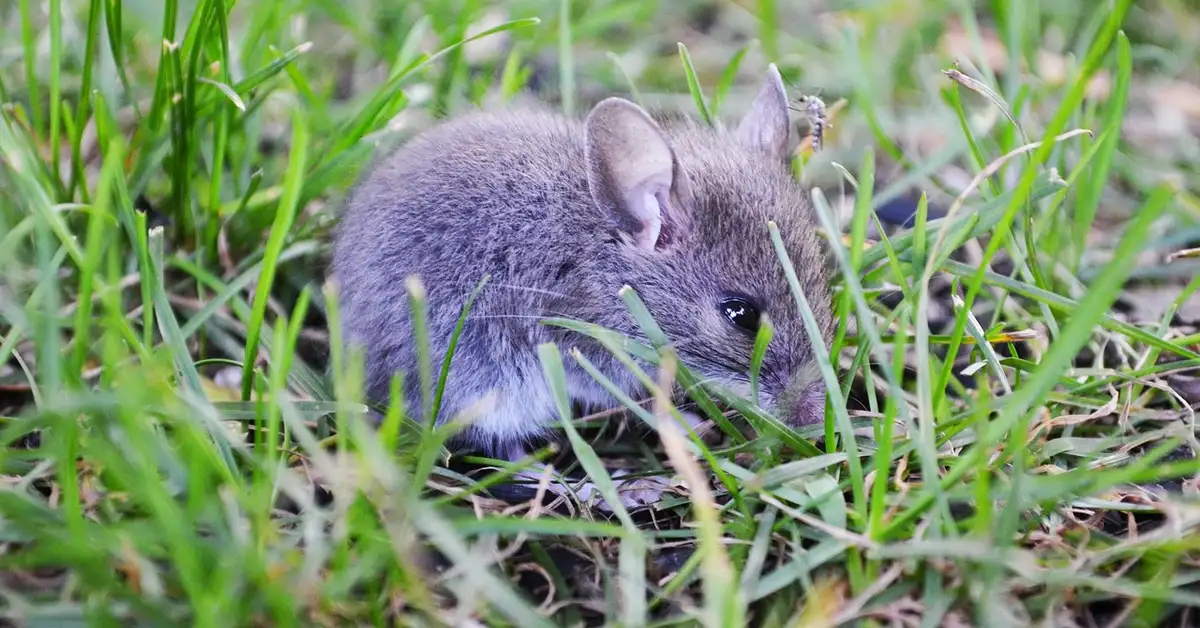
Normal Age-Related Changes in Mouse Behavior
As mice grow older, their pace of life often changes. It’s perfectly normal for a senior mouse to be less inclined to climb to the highest point in the cage or to take longer naps throughout the day. They might prefer easier-to-access food and water sources and become more set in their daily routines.
You may notice a shift in social dynamics. An older, previously dominant mouse might willingly cede the “best” sleeping spot to a younger, more energetic cage mate, choosing peace and comfort over status. My old boy Gregory has become this wise, slightly grumpy elder who prefers a steady, predictable life over the constant adventures of his youth.
Their curiosity doesn’t vanish, but it becomes more measured. While a young mouse will dash into a new tunnel, an older one will likely approach with deliberate caution, sniffing and observing before committing. This isn’t a sign of a failing mind, but rather a preference for stability born from experience.
Signs of Cognitive Decline or Memory Problems
It’s vital to distinguish slowing down from genuine cognitive distress. Be concerned if you see your mouse repeatedly getting “lost” or confused in a familiar cage layout, appearing disoriented even in their home territory. This is different from simple caution. Consult the “Signs of Stress — Mice” visual behavioral guide for photo-based examples and a short checklist to help you decide if the behavior indicates true distress. The guide highlights visual cues — posture, grooming, and activity changes — that often accompany cognitive problems.
Watch for changes in learned behaviors. A mouse that suddenly forgets the location of its food dish or water bottle, or stops responding to a trained cue it once knew well, may be experiencing memory issues. This was a early sign I noticed with a past mouse, who began overlooking a favorite hidden treat spot he’d visited daily for months.
Other red flags include a significant loss of appetite not linked to dental issues, increased lethargy beyond normal napping, and a lack of interest in social grooming or interaction with cage mates. Any drastic shift in their core personality or ability to perform routine activities warrants a closer look and potentially a vet visit.
Supporting Cognitive Health Throughout Life
Consistency provides a foundation of safety, but novelty is the fertilizer for a healthy mouse brain. Strike a balance by keeping their core resources-food, water, a favorite hide-in the same place while frequently changing out other toys and accessories. This routine-within-variety model reduces stress while promoting active learning.
Social interaction is non-negotiable for cognitive wellness. Mice are intensely social creatures, and daily interaction with their group is a powerful form of mental stimulation that you simply cannot replicate with toys alone. The gentle grooming, playful chasing, and shared sleeping piles all contribute to a complex and engaged social brain.
Nutrition plays a direct role in brain health. Ensure their diet includes foods rich in antioxidants; I occasionally offer my mice small bits of broccoli and blueberries, which they adore. A high-quality lab block should be their dietary staple, providing all the essential nutrients for neurological function.
Finally, manage their stress. A calm, predictable environment with plenty of hiding spots allows a mouse to feel secure enough to explore and learn. Loud noises, frequent predator smells (like from other pets), or constant major disruptions can trigger a stress response that is detrimental to long-term cognitive health. If your mouse shows signs of fear or anxiety, respond with calm, gradual handling and give it extra opportunities to hide and retreat. These simple steps help a scared pet feel safer and rebuild confidence.
Frequently Asked Questions
How does maze learning in decapod crustaceans relate to my pet mouse?
Studies on decapod crustaceans, like crabs or lobsters, have shown they can learn and remember maze paths, demonstrating that spatial learning and memory are fundamental cognitive processes across many species, not just mammals. This universality highlights that providing maze-like challenges for your pet mouse taps into their innate problem-solving abilities, much like it does in other animals, promoting mental stimulation and overall well-being in a way that aligns with their natural instincts.
What exactly is learning memory, and how does it work in mice?
Learning memory refers to the brain’s ability to encode, store, and retrieve information gained from experiences, allowing an organism to adapt its behavior based on past events. In pet mice, this means they can remember the location of food hides, recognize their owner’s scent, or recall successful routes in a DIY maze, using brain regions like the hippocampus to form lasting associations that guide their daily actions and interactions.
What is a maze memory task, and why is it useful for understanding my mouse’s cognition?
A maze memory task is a structured test where an animal must navigate a path or locate a reward based on remembered cues, directly assessing their spatial learning and recall abilities. For pet mouse owners, incorporating simple versions of these tasks at home can help you gauge your mouse’s cognitive health, identify any changes in memory performance, and provide engaging enrichment that supports their natural curiosity and mental agility.
Your Journey with Your Clever Mouse
Watching your mouse navigate a simple cardboard maze offers a beautiful window into their active, problem-solving mind. These small tests show us that learning and memory are not just abstract concepts, but living processes we can observe and nurture in our own homes. Every twist and turn your mouse masters is a testament to their incredible cognitive abilities.
Use these insights to build a more engaging and thoughtful habitat for your curious companion. The real joy comes from providing varied enrichment that challenges their brains as much as it delights their natural instincts. Your observations will deepen your bond and reveal just how intelligent your tiny friend truly is.
Further Reading & Sources
- Y-maze spatial learning and memory testing | Noldus
- Assessment of spatial learning and memory in the Barnes maze task in rodents-methodological consideration | Naunyn-Schmiedeberg’s Archives of Pharmacology
- Morris Water Maze Test for Learning and Memory Deficits in Alzheimer’s Disease Model Mice – PMC
Isabella is a passionate small pet enthusiast with over 8 years of experience in caring for mice. She loves sharing practical tips and heartfelt stories to help fellow mouse owners provide the best care for their tiny companions.
Mice in Science & History