
Mouse Coat Colors Demystified: Modifiers, Dilutes, and Self-Colors
Have you ever gazed at your mouse’s fur and wondered what creates those stunning shades and intricate patterns? I’m here to guide you through the fascinating world of mouse coat genetics, making complex terms simple and approachable for any pet owner.
In this article, you’ll learn how these elements shape your mouse’s appearance, with clear explanations of modifiers that alter patterns, dilutes that change color intensity, and self-colors that create uniform coats.
What Is Mouse Coat Color Genetics?
Mouse coat color genetics is like the hidden artist behind your pet’s beautiful fur, using a palette of genes to paint each unique shade and pattern. These genetic instructions determine everything from the deep brown of Gregory’s coat to the light gray of Kenny’s adventurous fur. By grasping the basics, you can better appreciate the diversity in your mouse family and understand why no two mice look exactly alike.
How Do Genes Control Pigment in Mouse Fur?
Genes act as tiny directors, telling cells which pigments to produce and where to place them in each hair strand. Two main pigments, eumelanin for dark colors like black or brown and pheomelanin for lighter tones such as yellow or cream, mix and match to create the coat you see. For instance, when I watch Kenny dart around, his light gray coat results from a specific gene combination that limits eumelanin, giving him that soft, silvery look. Pigments are distributed through hair follicles in patterns set by genes, much like a painter carefully applying layers to a canvas.
- Eumelanin builds deep, rich hues like black or chocolate brown.
- Pheomelanin brings out warm, light shades such as golden or tan.
- Gene interactions can create banded hairs, seen in agouti patterns, where each hair has multiple color zones.
What Are Alleles and Why Do They Matter?
Alleles are different versions of a single gene, kind of like having various settings on a dial that adjust your mouse’s coat color. Each mouse inherits two alleles for every color gene-one from each parent-and the combination decides traits like whether fur appears dark or light, as explained in understanding genes and alleles. In my experience, this explains why Jeffrey, with his cheerful white coat, has alleles that suppress pigment production entirely, while Gregory’s steady dark brown comes from alleles promoting eumelanin. Understanding alleles helps you predict possible coat colors in offspring and appreciate the genetic lottery that makes each mouse special.
- Dominant alleles often override recessive ones, so a single copy can show a trait.
- Recessive alleles need two copies to appear, like in dilute colors that lighten the coat.
- Allele pairs create variations, so even siblings can have wildly different coats.
What Are Modifier Genes in Mice?
Modifier genes are the subtle tweakers in your mouse’s genetic code, fine-tuning base colors and textures without changing the fundamental hue. They work behind the scenes to add splashes of white, alter fur softness, or shift color intensity, giving each mouse a one-of-a-kind appearance. I’ve noticed this in my own pets, where modifiers make Kenny’s gray coat slightly lighter or add a textured feel to Jeffrey’s white fur, reminding me that genetics is full of delightful surprises. Meanwhile, pattern genes determine where those colors land, producing stripes, spots, or other markings. Together, modifiers and pattern genes decide both the shade and the placement of a mouse’s markings.
What Is the Mottled Modifier?
The mottled modifier introduces random, irregular patches of white or lighter color into the coat, creating a speckled or marbled effect. This isn’t the same as a solid pattern; it’s more like someone flicked paint onto the fur, resulting in a unique, ever-changing look. In past mice I’ve cared for, mottling made their coats resemble a starry night sky, with white spots scattered unpredictably. It’s a fun modifier that adds character, but it can vary greatly from mouse to mouse, so no two mottled coats are identical.
- Mottling often appears as small, uneven white areas mixed with the base color.
- It’s influenced by other genes, so expression can be subtle or bold.
- This modifier doesn’t affect health, just aesthetics, making it a harmless quirk.
What Are Hair Texture Modifiers?
Hair texture modifiers change how your mouse’s fur feels and looks, turning sleek coats into curly, wavy, or even plush varieties. Genes like the rex modifier, for example, cause hairs to curl softly, giving the coat a bouncy, tactile appeal that’s fun to pet. I recall a mouse with rex fur-it felt like running my fingers through velvety moss, and it stood out against Gregory’s smooth, steady coat. These modifiers don’t alter color directly but enhance the overall sensory experience of caring for your pet.
- Rex textures create curls that can range from loose waves to tight ringlets.
- Other modifiers might make fur longer or silkier, affecting grooming needs.
- Texture changes are purely cosmetic and don’t impact your mouse’s comfort or health.
How Do Modifiers Change Color Intensity?
Modifiers can dial color intensity up or down, acting like a dimmer switch on your mouse’s coat to create softer or brighter shades. Dilution modifiers, in particular, reduce pigment concentration, turning a deep black into a gentle blue-gray or a rich brown into a pale beige. With Jeffrey, his white coat is already light, but I’ve seen dilution in other mice mute vibrant colors into pastel tones. This happens because these genes affect how much pigment is packed into each hair, offering a spectrum of intensities that make mouse watching so engaging.
- Dilution genes lighten colors by spreading pigment thinly across hairs.
- Some intensifiers darken coats by increasing pigment density.
- Modifiers can interact with base colors to produce hues like lavender or champagne.
What Are Dilute Genes in Mice?
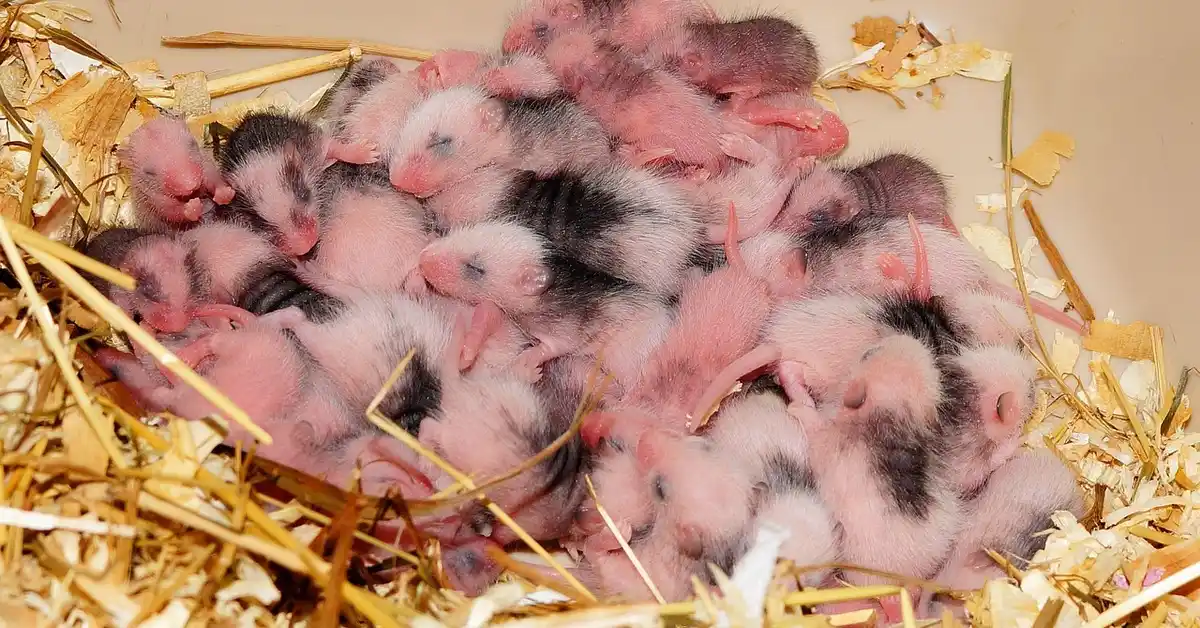
Dilute genes are like nature’s paint thinner, subtly lightening the base coat color of your mouse. They work by reducing the amount of pigment deposited in each hair shaft, creating a softer, paler version of the original color. Understanding these genes helps you predict the potential coat colors in a litter and appreciate the beautiful spectrum mice can display. For example, the dilute gene can turn a black coat into blue and a chocolate coat into lilac, producing those soft, muted shades people often admire. These predictable changes make it easier to anticipate and breed for specific colors.
What Is the Blue Dilution?
The blue dilution, often symbolized as ‘d’, transforms a rich black coat into a sleek, slate-gray color. It’s a recessive gene, meaning both parents must carry it for it to appear in their offspring. I’ve always found that blue-diluted mice, like a hypothetical light gray version of my Kenny, have a particularly elegant and silky appearance to their fur. This dilution is often responsible for the uniform, single-tone look seen in solid-colored mice. Paired with other solid-color genes, it can produce true single-color mice ranging from pale silver to deep charcoal. The color can range from a light silver to a deep charcoal depending on other genes present.
What Is the Champagne Dilution?
Champagne is a more complex dilution that creates warm, creamy tones. It lightens the coat while adding a golden or yellowish cast, much like its namesake beverage. This dilution can produce stunning results on darker base colors, creating shades reminiscent of toasted almond or pale honey. It’s one of my personal favorites for the way it brings a soft warmth to a mouse’s appearance.
What Are Albino and Himalayan Dilutions?
These are the most extreme dilutions, essentially removing color entirely from the coat. Albino mice lack pigment completely, resulting in white fur and pink eyes due to the ‘c’ gene. Himalayans are temperature-sensitive – darker color appears on the cooler extremities like nose, ears, and tail. My Jeffrey, with his white coat, shows how these dilutions create the most dramatic transformations in appearance. These mice require careful monitoring as their lack of eye pigment can make them more sensitive to bright light.
How Do Dilutes Affect Color Tone?
Dilutes don’t just make colors lighter – they fundamentally change the character of the coat. They can mute vibrant shades into pastels or transform deep browns into delicate fawns. The magic of dilutes lies in their ability to create entirely new color families from the same genetic foundation. When combined with other genes, the possibilities become nearly endless, which explains why mouse fanciers find such joy in breeding for specific shades.
What Are Self-Colors in Mice?
Self-colors represent the most straightforward coat pattern – a single, solid color distributed evenly across the entire body. Unlike patterned coats where multiple colors appear, self mice display one consistent shade from nose to tail. Self-colored mice like my Gregory offer a beautiful simplicity that lets you appreciate the pure richness of a single hue. These coats showcase the depth and quality of pigmentation without distraction.
What Is Black Self-Color?
A true black self mouse displays a deep, jet-black coat without any lighter ticking or banding. The color should be consistent from root to tip of each hair. Quality black self mice have an almost luminous quality to their fur, with no rusty or brownish tones visible in proper lighting. This requires the presence of the black (B) gene and the absence of any dilution genes that might lighten the color.
What Is Chocolate Self-Color?
Chocolate self mice showcase a rich, warm brown that resembles dark baking chocolate. This color results from the brown (b) gene working on a black base. The best chocolate specimens have an even, deep brown color that doesn’t fade to lighter tones on the belly or around the face. It’s a particularly striking color that maintains its richness throughout the mouse’s life.
What Is Beige and Tan Self-Color?
Beige and tan represent the lighter end of the self-color spectrum. Beige mice display a pale, creamy brown, while tan mice show a warmer, reddish-brown tone. These lighter self-colors often have a delicate, almost powdery quality to their appearance that I find particularly charming. They result from specific combinations of the extension gene and other modifiers working on agouti foundations.
How Do Self-Colors Differ from Agouti Patterns?
While self-colors are solid throughout, agouti patterns feature banded hairs with multiple colors on each shaft. An agouti mouse might have dark roots, light bands, and dark tips creating a speckled appearance. The fundamental difference lies in hair shaft patterning – self colors maintain one pigment throughout each hair, while agouti hairs tell a more complex color story. This distinction becomes obvious when you gently blow on the coat to see the hair roots and banding patterns.
How Do Modifiers, Dilutes, and Self-Colors Work Together?
These genetic elements interact in a beautifully complex dance to create the incredible variety we see in fancy mice. Think of it as a layered artistic process where each element builds upon the previous one. Watching these genetic interactions unfold across generations is like observing nature’s own painting workshop in action. The combinations can produce results that surprise even experienced breeders.
What Is the Order of Genetic Expression?
Genetic expression typically follows a specific sequence. First, base color genes establish the foundation (black vs chocolate). Next, pattern genes determine the distribution (self vs agouti). Then dilution genes lighten the result, and finally modifiers add the finishing touches. This hierarchical system means that a dilution gene will affect whatever base color and pattern are already present. Understanding this sequence helps explain why certain color combinations appear while others never manifest.
How Do Multiple Dilutes or Modifiers Combine?
When multiple dilutes or modifiers are present, they can create compound effects. Two different dilutes might work together to create an extremely pale color, or they might cancel each other out in unexpected ways. The most fascinating combinations occur when modifiers interact with already-diluted colors, creating shades so unique they often earn their own names in mouse fancy circles. This explains why breeding for specific colors requires understanding not just what genes are present, but how they’ll interact with each other.
How Can You Identify Your Mouse’s Color Genetics?
What Visual Clues Indicate Dilution?
Dilution genes act like a soft-focus filter over your mouse’s base coat, subtly lightening the pigment. Look for a washed-out, pastel version of a standard color, where black becomes a soft blue-gray and chocolate brown fades to a warm beige. The eyes often hold a key clue; a diluted mouse typically has dark ruby or deep burgundy eyes instead of the solid black you’d see in its non-diluted counterpart. My mouse Jeffery, for instance, is a dilute; his white coat has the faintest creamy undertone, a telltale sign of pigment lightening at work.
- A “blue” mouse is actually a diluted black.
- A “dove” or “fawn” mouse is a diluted chocolate.
- Observe the foot leather and ear color; they will also appear lighter.
- The overall effect is muted, never stark or brilliant.
What Visual Clues Indicate Modifiers?
Modifiers are the artists of the mouse world, adding intricate patterns and subtle shading to the canvas of the coat. These genes don’t change the base color itself but instead create effects like brindling, silvering, or tan points. A brindled mouse will have a fine, salt-and-pepper mixture of colored and white hairs, while a silvered mouse appears as if dusted with frost. Look for uneven color distribution or a shimmering effect when the fur moves in the light. Modifiers can be tricky, as their expression can vary with age and even between siblings. These effects are part of basic genetics 101 terminology for mice, showing how phenotype can change without altering the base-color genotype. Familiar terms like genotype, phenotype, dominant, and recessive help explain how modifiers are inherited and expressed.
- Brindling: A messy, mixed pattern of dark and light hairs.
- Silvering: White-tipped hairs scattered throughout the coat.
- Tan Point: Specific, distinct areas of lighter color, like on the belly or behind the ears.
- Belly Color: A solid white belly on a colored mouse often indicates a modifying gene.
How Do You Determine Base Self-Color?
Finding the base self-color requires you to look past the fancy patterns and see the foundational hue. Gently part the fur on your mouse’s back and examine the hair closest to the skin-the roots don’t lie. A self-colored mouse will have the same solid color from root to tip, with no bands, spots, or patches of white. My older mouse, Gregory, is a perfect example of a self-color; his rich, dark brown coat is uniform across his entire body, a testament to his straightforward genetic makeup. This is the purest form of color expression in mice.
- Part the fur on the spine to check the hair roots.
- Look for a single, consistent color from head to tail.
- Check the belly; a self-mouse will have the same color on its underside.
- Ignore any white markings on the feet or face, as these are separate genes.
Do Mouse Coat Colors Affect Health or Care?
This is a question I hear often, and the answer brings both relief and important considerations. For the vast majority of colors and patterns, your mouse’s coat has no direct impact on its overall health or the daily care it requires. A black mouse needs the same nutritious diet, clean habitat, and social enrichment as a spotted or a diluted one. Their vibrant coats are simply beautiful variations, not indicators of fragility.
There are, however, a few notable and well-documented exceptions linked to specific genes. The piebald spotting gene, which creates those cute white patches, can sometimes be linked with a condition called megacolon, where the nerves in the colon don’t develop properly. Mice with a lot of white, especially those with a white belly and flank spots, may have a higher statistical chance of being affected. It’s not a guarantee, but something to be aware of so you can watch for signs of digestive issues.
- Extreme Dilution: Some very rare, extreme dilutions can be associated with minor vision problems.
- Piebald/White Markings: A potential link to megacolon requires attentive monitoring of digestive health.
- Red-Eyed Mice: Mice with pink or red eyes can be slightly more sensitive to bright light.
- General Rule: Color itself is not a disease, but certain pattern genes can have side effects.
Caring for a mouse with a known linked condition simply means being a more observant owner. You provide the same excellent standard of care for every mouse, but you add an extra layer of vigilance for specific potential issues. Knowing this genetic background doesn’t change your love for your pet; it empowers you to be the best caretaker you can be, ready to support them through anything.
Frequently Asked Questions
What are the main coat color genes in mice?
The main coat color genes in mice include the Agouti (A) gene, which decides if the coat has a banded agouti pattern or a solid self-color, and the Extension (E) gene that influences whether dark eumelanin or light pheomelanin is more prominent. Other key genes are the Brown (B) gene, determining if the base color is black or chocolate, and dilution genes like Blue (d) or Albino (c) that lighten pigments, along with modifiers that add patterns or change texture without altering the fundamental hue. Specifically, examining the B c d p loci clarifies differences like black vs. chocolate (B), albinism (c), blue dilution (d), and pink-eyed dilution (p). Understanding how these loci interact helps explain the full range of mouse coat color phenotypes.
Is there a coat color genetics calculator for mice?
Yes, online coat color genetics calculators for mice are available, often used by breeders to predict possible offspring colors based on parental genotypes. These tools typically allow you to input known genes, such as those for agouti, dilution, or self-colors, and generate potential outcomes using Punnett squares or probability charts, though they may not account for every rare modifier or complex interaction. Specifically, the agouti locus determines whether hairs show the banding that produces the wild-type agouti base coat colors versus non-agouti (self) coats. Including the correct agouti alleles in calculators is important because they strongly influence the offspring’s base coat colors.
How does coat color inheritance work in mice?
Coat color inheritance in mice follows Mendelian genetics, where each parent passes down one allele per gene to their offspring, and combinations of dominant and recessive alleles determine traits. For example, a dominant allele for black color can override a recessive one for brown, while dilution genes need two recessive copies to lighten the coat. This inheritance system, combined with interactions between multiple genes, explains why siblings can have diverse coats even from the same parents.
Your Path Forward
Learning about the genetic artistry behind your mouse’s coat is one of the most rewarding parts of being an owner. This knowledge transforms a simple observation into a deeper appreciation for the unique life sharing your home. You’ll start seeing the subtle interplay of self-colors, dilutes, and modifiers in every mouse you meet. Understanding the nuances of mouse coloration can be quite fascinating.
Your journey into mouse genetics doesn’t just identify colors—it builds a richer connection with your tiny companions. Keep observing, stay curious, and enjoy the beautiful, living tapestry that is your mouse’s coat. A visual guide to mouse color genetics helps you translate coat patterns into likely genotypes and predict offspring colors. Use it to enhance your observations and deepen your appreciation.
Further Reading & Sources
- MGI – The Coat Colors of Mice by Willys K. Silvers
- Mouse coat color mutations: From fancy mice to functional genomics – Steingrímsson – 2006 – Developmental Dynamics – Wiley Online Library
- [The genetic control of mouse coat color and its applications in genetics teaching] – PubMed
Isabella is a passionate small pet enthusiast with over 8 years of experience in caring for mice. She loves sharing practical tips and heartfelt stories to help fellow mouse owners provide the best care for their tiny companions.
Mice Genetics